
Easy Pignoli Cookies with Almond Flour (No Almond Paste)
This post may contain affiliate links. For more information, please see our disclosure policy.
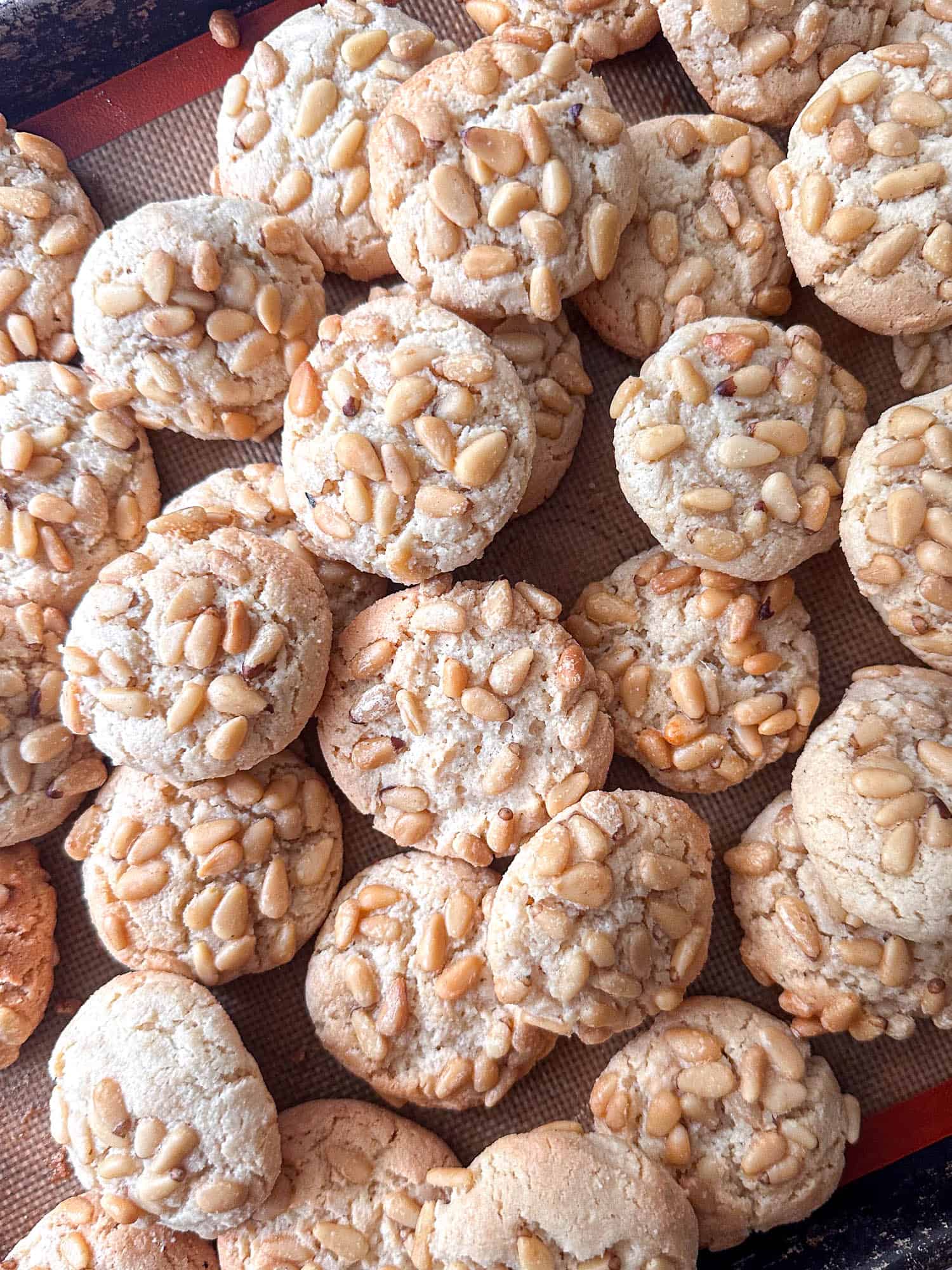
These easy pignoli cookies are a popular Italian cookie made with almond flour instead of almond paste — simpler and cheaper than the classic version, and naturally gluten-free. The dough comes together with just a few ingredients (almond flour, sugar, eggs, and almond extract), then gets topped with pine nuts and baked until chewy in the center with lightly golden edges.
Pignoli cookies are a staple of Italian-American holiday cookie trays, and this almond flour version tastes just like the ones from an Italian bakery — without hunting down a can of almond paste!
Why You’ll Love This Recipe
- These taste just like the pignoli cookies from an Italian bakery — but soooo much cheaper! No expensive almond paste needed, just almond flour!
- Chewy centers, golden edges, and naturally gluten-free — my mom made about 1,000 of these a year, so this recipe is truly tried and true!
- Makes about 40 cookies — enough for the whole holiday tray — with all my tips for getting that perfect marzipan-like dough.
What are Pignoli Cookies?
Pignoli cookies (pronounced pin-YOH-lee) come from southern Italy, especially Sicily, where almonds and pine nuts have been baked into sweets for centuries. Italian immigrants brought them to the U.S., and they became a fixture in Italian-American bakeries — especially around Christmas and Easter, when no cookie tray is complete without them.
The pignoli cookies were one of my mom’s specialties (probably because it is her favorite cookie). She made this recipe for sooooo many years that I’ve lost count! I’m estimating that she made about 1000 of these cookies a year!
Another very popular Italian cookie is something called the Italian wedding cookie.
Are Pignoli Cookies Gluten-Free?
Yes — pignoli cookies are naturally gluten-free. Traditional recipes use almond paste or almond flour rather than wheat flour, and this version is made entirely with almond flour, sugar, eggs, and pine nuts. Just double-check your almond flour’s label if you’re baking for someone with celiac disease, since some brands are processed in facilities that also handle wheat.
Watch How to Make
Prefer to watch instead of read? See exactly how I make it in the video below!
Ingredient Notes
Almond flour — use finely ground blanched almond flour, not almond meal; the coarse grind makes gritty, crumbly cookies. You’ll need about a pound (4¾ cups / 454 g — see King Arthur’s ingredient weight chart). Weighing beats measuring: almond flour compacts easily, and over-measuring is the top cause of dry cookies. This is what replaces the almond paste in traditional recipes.
Sugar — plain granulated, about a pound (2¼ cups). Half gets beaten with the eggs until fluffy, which is what gives these their light, chewy texture; the rest goes in with the flour.
Eggs — two large whole eggs, plus a third on standby if the dough is crumbly. Whole eggs (instead of the egg whites most recipes use) make these richer and chewier than bakery meringue-style pignoli. You’ll also use one extra egg white, thinned with water, to make the pine nuts stick.
Pine nuts (pignoli) — the signature topping and the only splurge ingredient. I use about 3/4 cup of raw nuts to top the whole batch — raw, not toasted, since they toast in the oven. You can find these at Costco or Trader Joe’s if you have those stores nearby; keep extras in the freezer; they go rancid quickly at room temperature.
Almond extract — a full tablespoon, and it does the heavy lifting for that bakery almond-paste flavor. Use pure, not imitation, if possible.
Method Overview
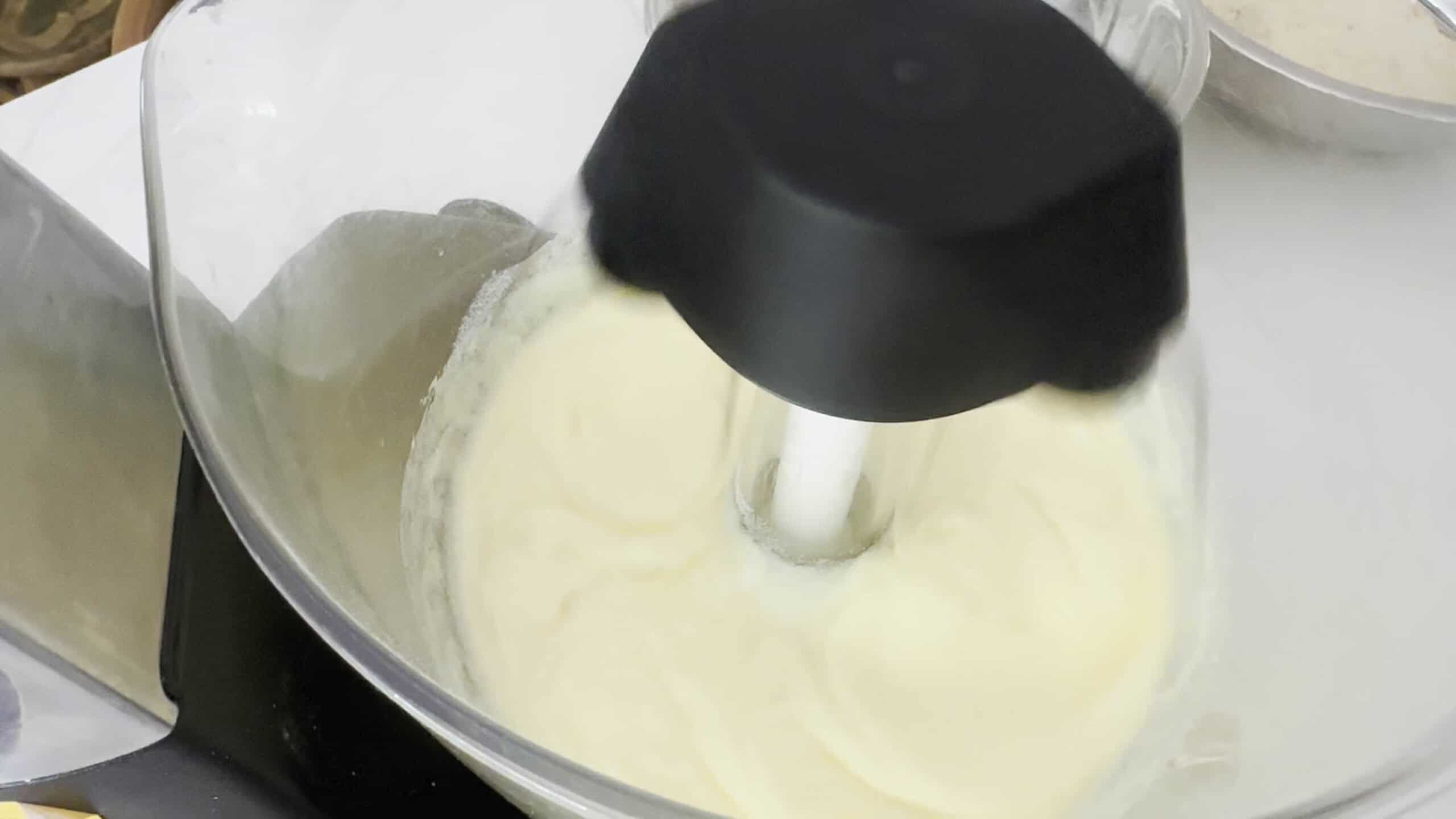
The method is simple: beat the eggs with half the sugar until light and fluffy, then mix in the almond flour, remaining sugar, and almond extract until you have a stiff dough that holds together when formed (add the extra egg if it’s crumbly).
Scoop into balls just smaller than a golf ball, roll each one until smooth, slightly flatten them, dip the tops in egg white and then in pine nuts, and bake at 340°F for 20 to 22 minutes — just until barely golden. Don’t overbake; they should stay chewy in the center.
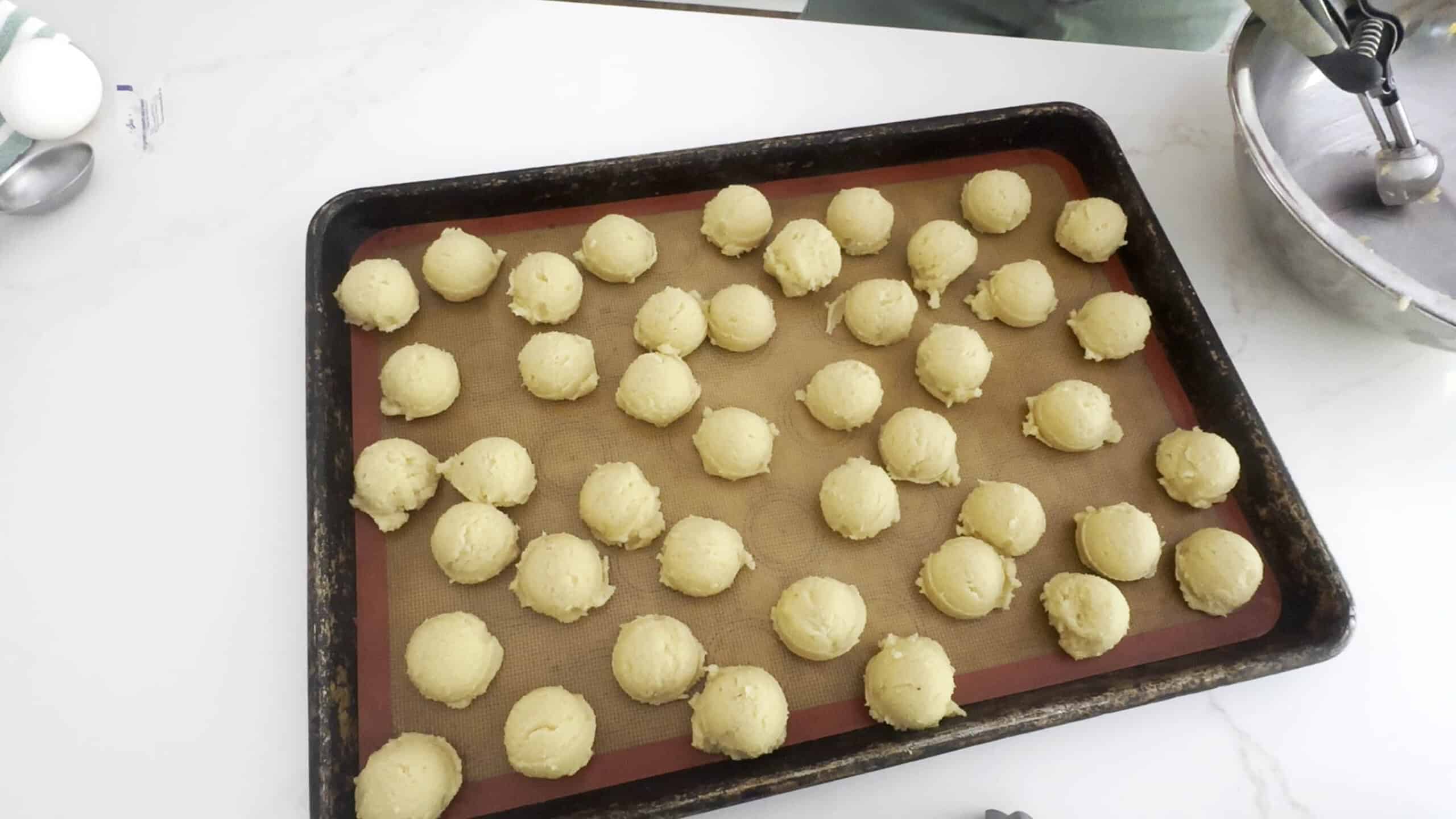
This recipe makes about 40 cookies — they only puff about 30% bigger, so you can fit 20 per half-sheet pan without them touching.
Dough Consistency
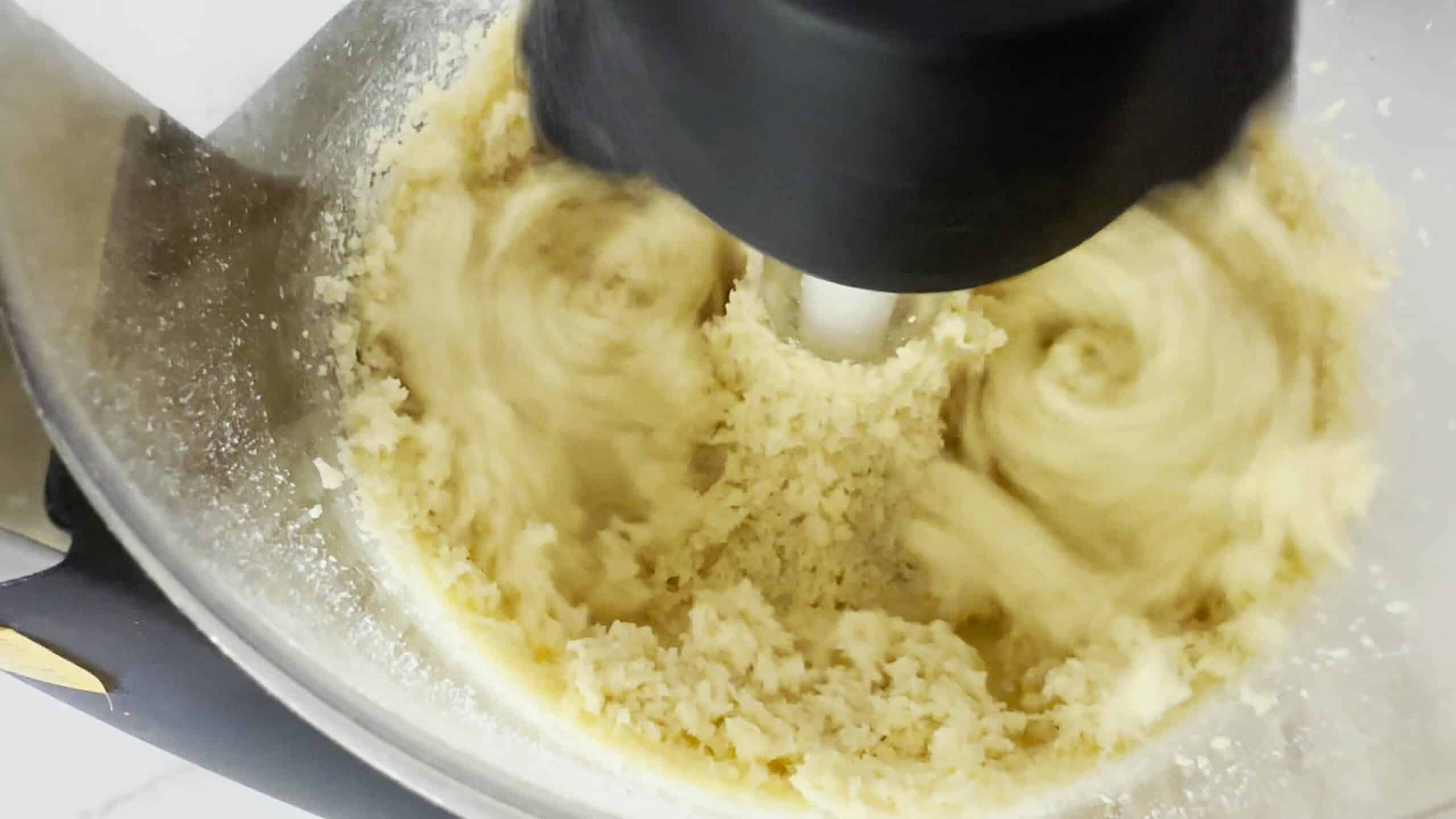
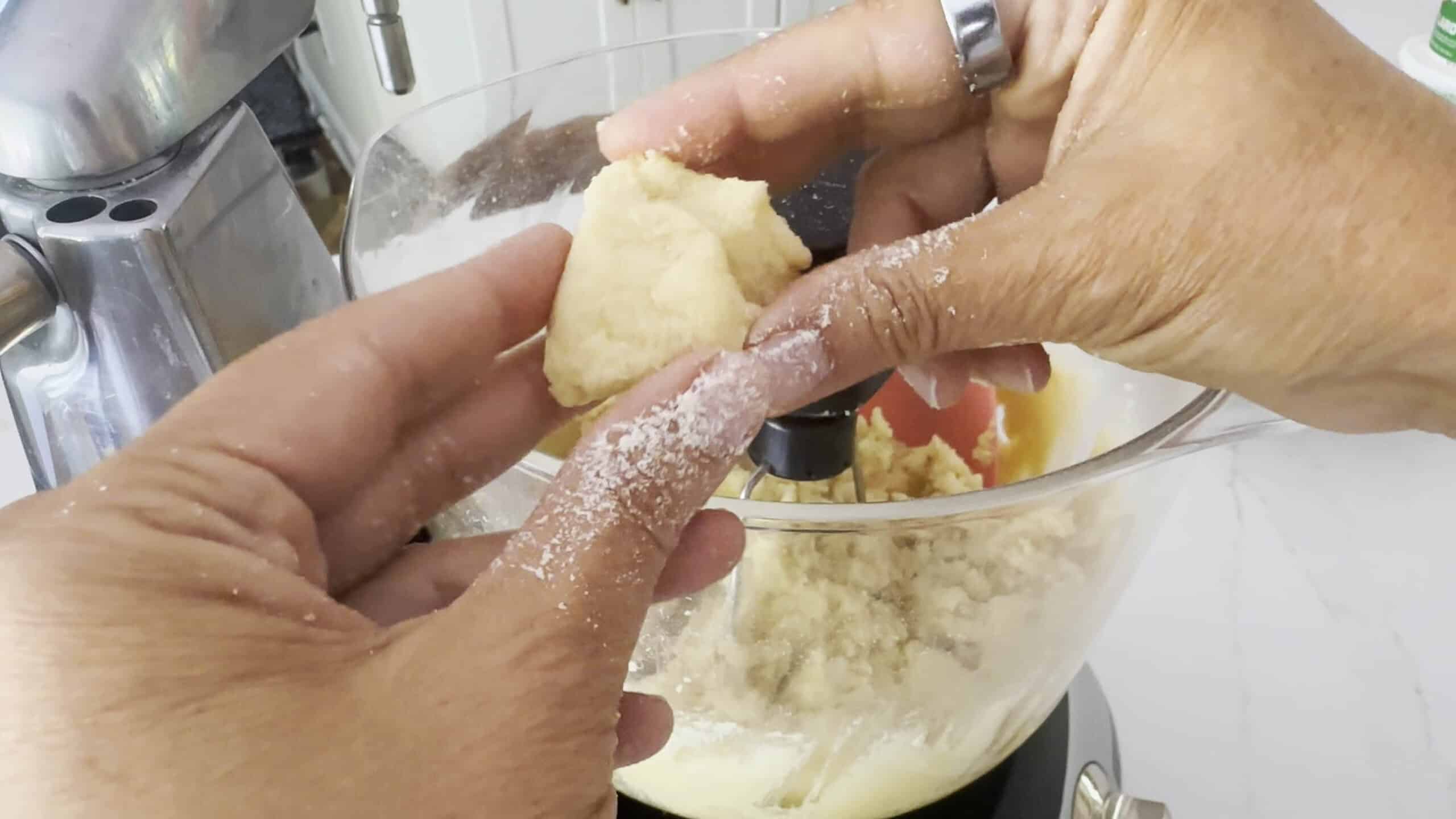
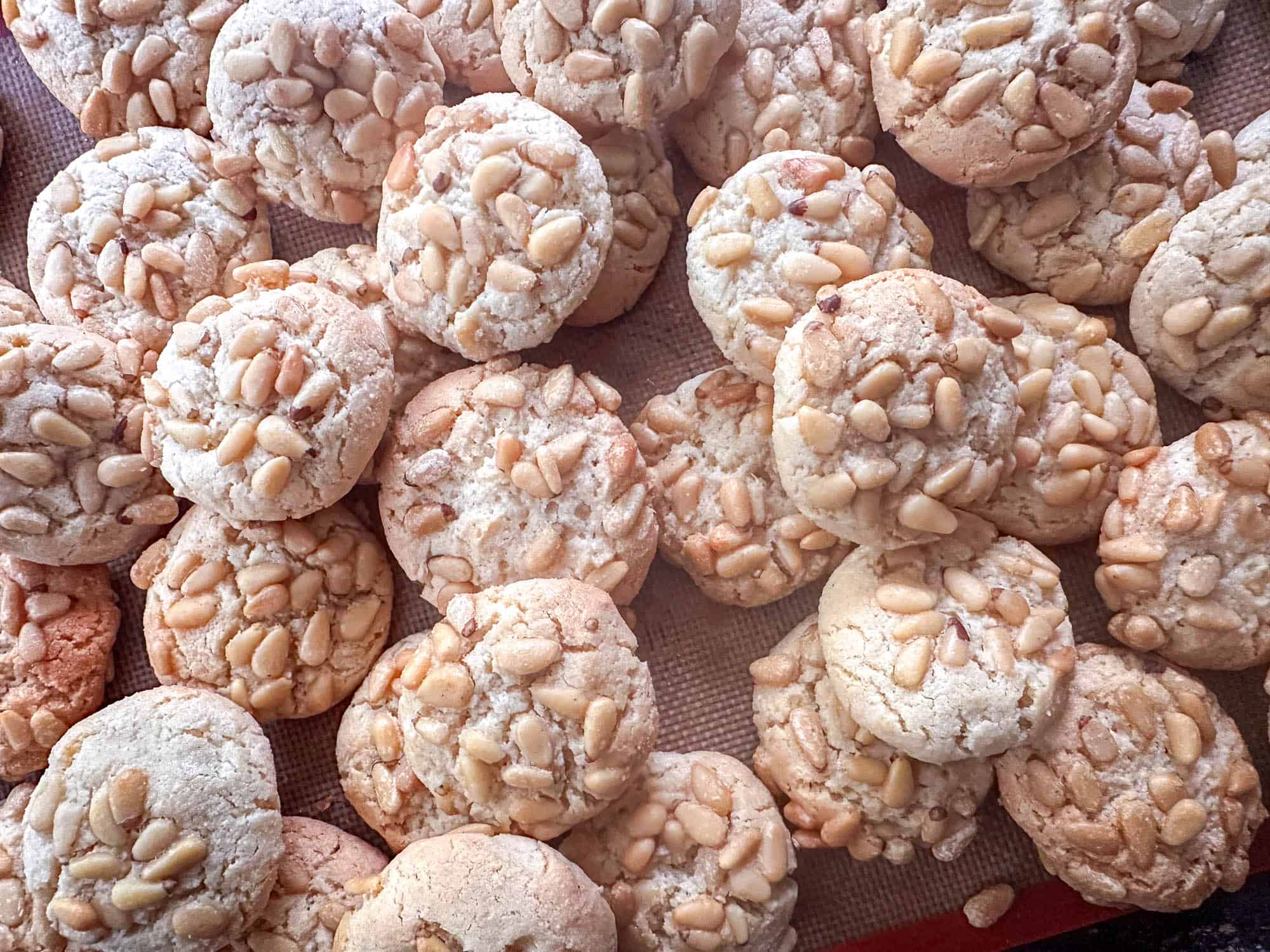
I was surprised to see that dough for these cookies is rather stiff, but it is NOT dry. You’re looking for a marzipan-like texture: moldable, holding its shape easily when formed into balls. To get there, add the almond flour slowly at the end, and if the dough still seems too dry, work in another half to whole egg. My mom recommends a ratio of 1 pound almond flour: 1 pound sugar: 2 large eggs. Add the extract and pine nut topping, and voila, you have these cookies!
Troubleshooting Pignoli Cookies
Why did my pignoli cookies spread too much?
Spreading usually means the dough was too warm or too wet. Chill the dough for 20–30 minutes before dipping, and make sure you measured the almond flour correctly (454 grams — weighing is more reliable than cups). If your eggs were on the large side, add almond flour a tablespoon at a time until the dough holds its shape.
Why did my cookies crack on top?
A few cracks are normal and traditional. Deep cracking usually means the oven was too hot or the dough was too dry — check your oven with a thermometer and don’t overbake past 22 minutes.
Why are my pignoli cookies dry and crumbly?
Overbaking is the usual culprit — pignoli cookies should come out of the oven looking slightly underdone in the center; they firm up as they cool. Too much almond flour will also dry them out, which is another reason to weigh it.
Tips for baking with almond flour
Use finely ground blanched almond flour, not almond meal — the coarser grind makes gritty, crumbly cookies. Almond flour browns faster than wheat flour, so watch the bottoms in the last few minutes. For measuring, follow King Arthur Baking’s weight standard of about 96 g per cup.
Make-Ahead, Storage, and Freezing
Freezing: Both the dough and the baked cookies freeze well. Freeze dough balls (before the pine nut coating) on a tray, then bag them for up to 3 months; thaw in the fridge overnight, roll in pine nuts, and bake as directed, adding a minute or two. Baked cookies freeze for up to 3 months — thaw at room temperature, uncovered, so they don’t go soft.
Make ahead: The dough can be made up to 2 days in advance — wrap it tightly and refrigerate. Let it sit at room temperature for about 15 minutes before dipping in pine nuts.
Storage: Store baked cookies in an airtight container at room temperature for up to 3 days, or refrigerate for about a week. Layer them between sheets of parchment paper so the pine nuts don’t snag.
Other Favorite Italian Cookies:
♥️ Loved this recipe? I’d be thrilled if you’d rate it ⭐️ and share your experience in the comments below! Your ratings and comments help other readers discover this recipe and keep this blog going. Did you add any special tweaks? Our community of home cooks would love to hear about it! ♥️
📖 Recipe
Easy Pignoli Cookies with Almond Flour (no paste needed)
Click the heart icon ♡ above to save a recipe. To find your saved recipes later, click the heart icon on the right side of the screen near the search icon and select My Favorites.
Video
Ingredients
Cookie dough
- 4 3/4 cups (454 g) almond flour 1 pound
- 2 1/4 cups (454 g) sugar 1 pound
- 2 large (2 large) eggs plus 1/2 to 1 extra if needed
- 1 tablespoon (1 tablespoon) almond extract
To top cookies
- 1 large (1 large) egg white
- 2 tbsp water
- 3/4 cup (100 g) raw pignoli nuts plus more if needed
Instructions
To Make the Cookie Dough
- Add eggs and about half of the sugar to the bowl of a stand mixer and beat on medium speed until light and fluffy.
- Add flour and remaining sugar and almond extract and beat until everything has been well incorporated. The texture will be somewhat stiff but not overly dry and NOT crumbly (see photos) If needed, add an extra egg. The mixture should easily hold together when formed into small balls.

- Line a cookie sheet with parchment paper or silicone baking mat.
Forming and Topping the Pignoli Cookies
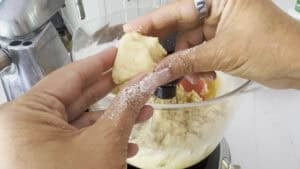
- Form cookies into round balls that are a bit smaller than the size of a golfball (I used a two-tablespoon cookie scoop for large cookies). After forming, slightly flatten the tops of all cookies.
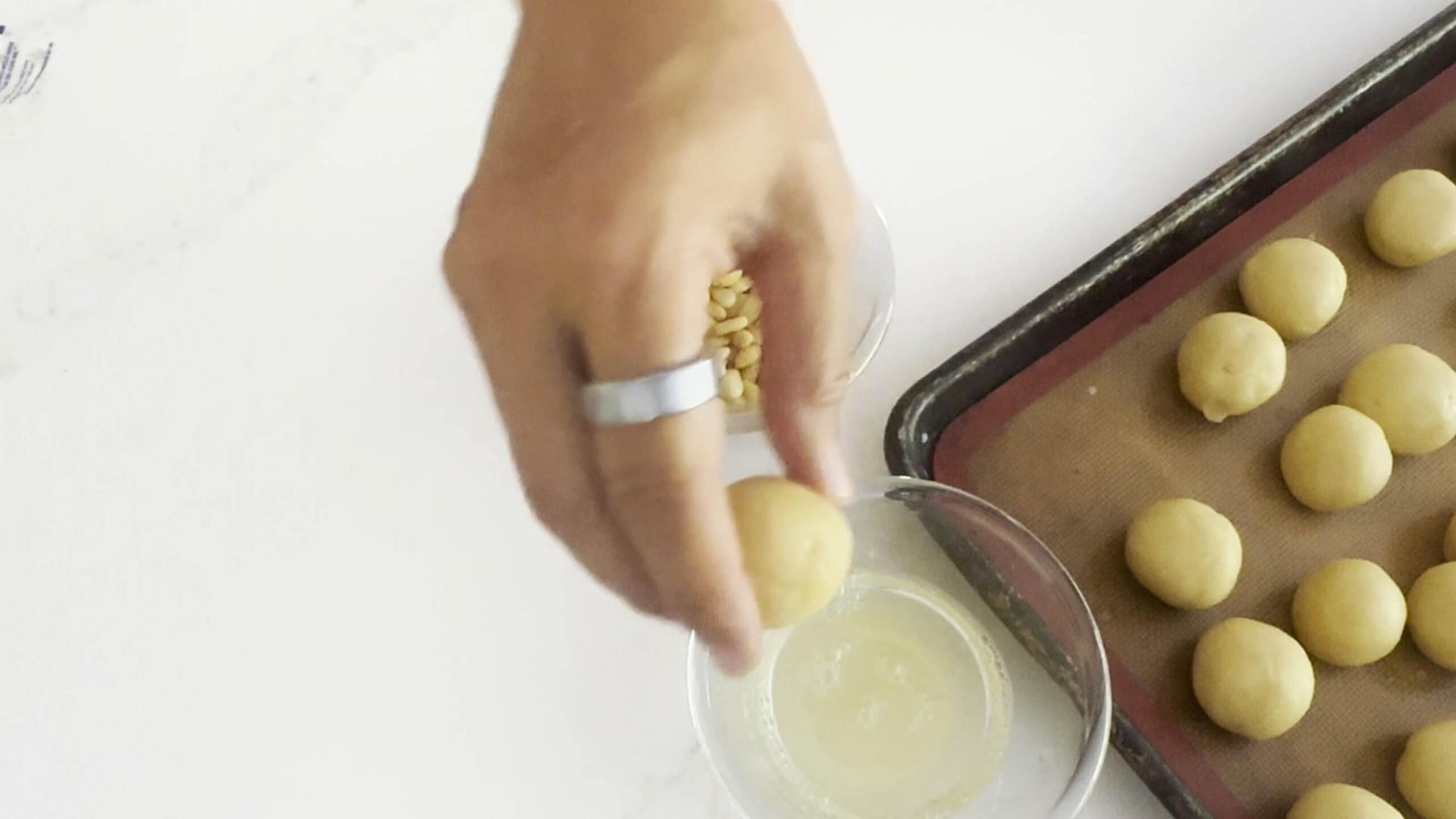
- In a small container, add the egg white and 1 to 2 tablespoons of water, then mix.
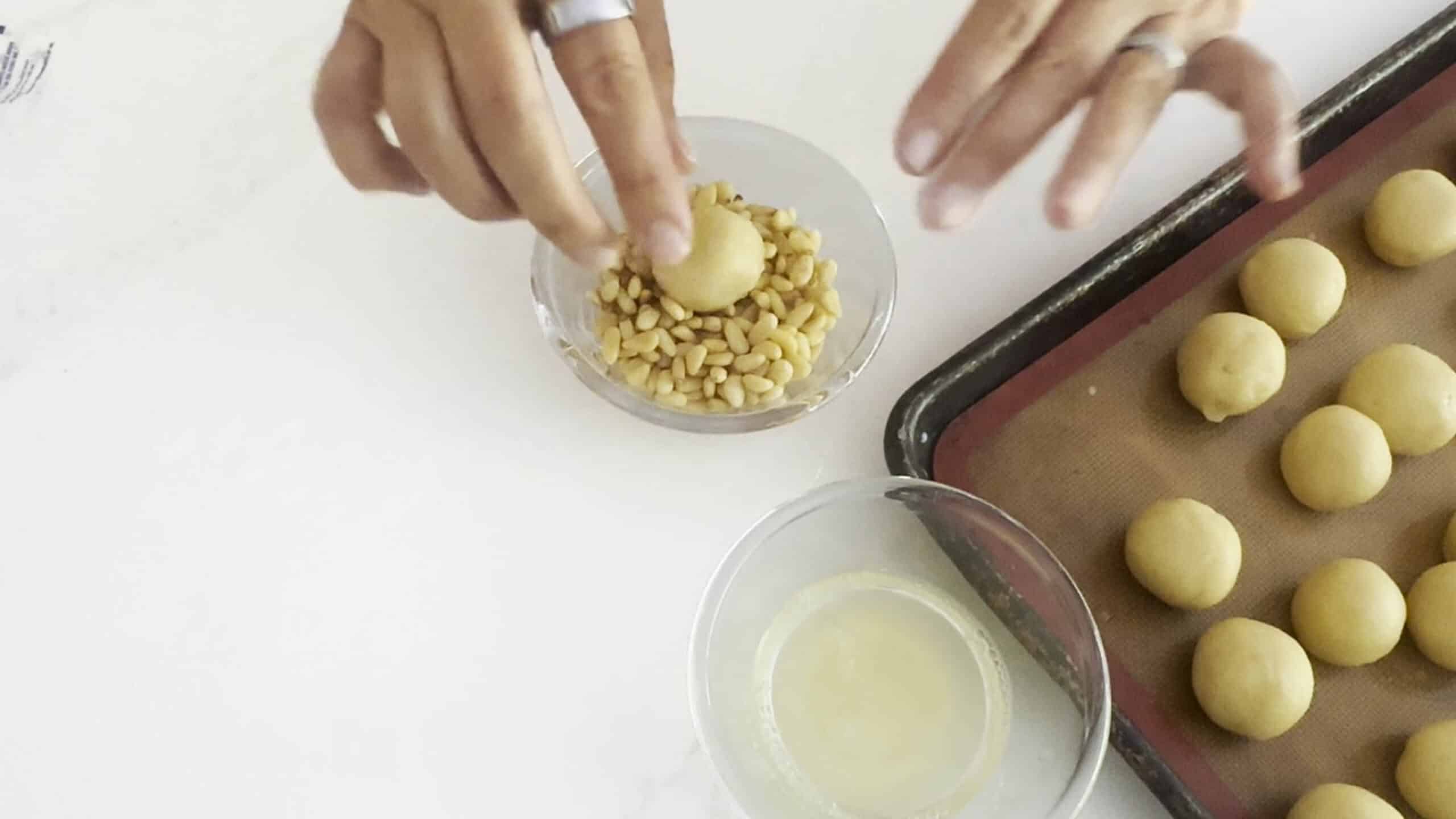
- Pour about half the nuts into another dipping dish and refill as you go — this keeps the whole supply from getting gummy with egg white, and any untouched nuts go straight back in the freezer for next time.
- Dip the top of each cookie into the egg white mixture, then dip it into the nuts, and place the cookie nut side up on the lined cookie sheet.
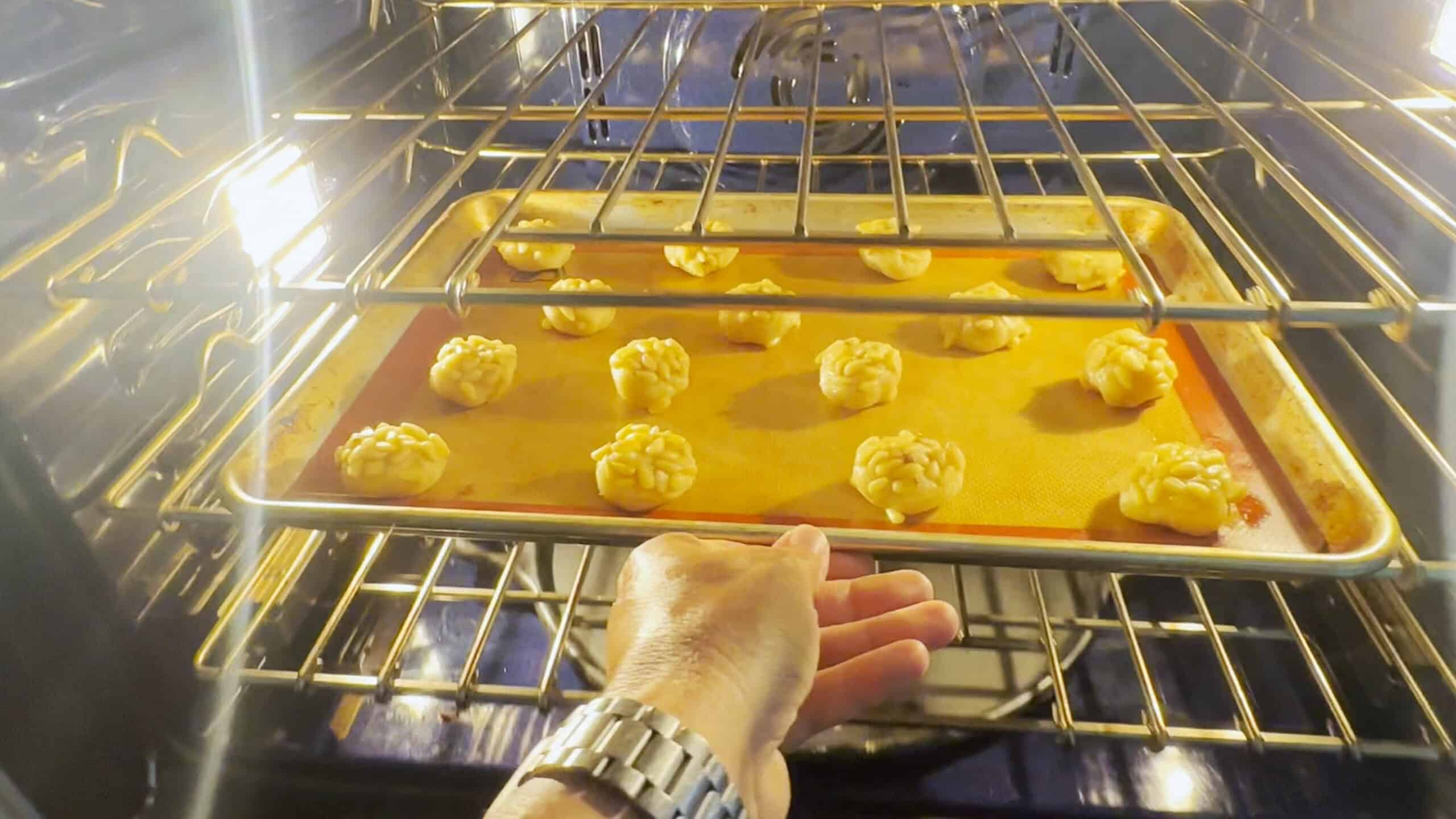
- Preheat the oven to 340°F.
- Bake cookies for about 20 to 22 minutes until just slightly golden. Do NOT overbake as the cookies will be dry. Begin checking your cookies after about 15 minutes as oven temperatures/power may vary.
Notes
Nutrition
Frequently Asked Questions
Yes. Freeze the dough balls before dipping them in pine nuts, then bag them for up to 3 months. Thaw overnight in the fridge, coat in pine nuts, and bake as directed.
Pine nuts are the signature ingredient, but if they’re unavailable or too expensive, slivered or sliced almonds are the closest substitute in look and flavor. Chopped walnuts also work, though the cookie technically becomes a different (still delicious) thing.
Two reasons: pine nuts are one of the priciest nuts you can buy, and most bakery recipes also use canned almond paste, which isn’t cheap either. Making them at home with almond flour skips the almond paste entirely, so this version costs a fraction of the bakery price — the pine nuts are the only splurge.
Store the dough in the fridge for 2 days, and keep baked cookies fresh for 3 days in an airtight container—or freeze them for up to 3 months. They’re a great cookie-tray candidate to bake ahead in December.
No — that’s the whole point of this recipe. Almond flour plus almond extract gives you the same flavor and chew without tracking down (or paying for) almond paste.
Drop the temperature by 25°F and start checking 2–3 minutes early — almond flour cookies brown quickly with a fan.
Does this recipe call for whole eggs or egg whites only (besides the coating)? It’s the only pignoli cookie recipe I’ve seen that uses whole egg and not just egg white.
Yup, whole eggs! My version uses whole eggs because it comes from a very old Italian cookbook that we’ve been using for years. Traditional Italian almond cookies often used whole eggs to add richness and because homemade almond paste needed the extra binding. Interestingly, if you searched for this recipe in Italian, you would see a mix of versions, some with whole eggs or yolks and others with only egg whites.
Great, thanks!
Hi Marie,
Do you use a whisk to whip the eggs and sugar and then transfer over to a paddle to finish mixing the dough once other ingredients are added?
Thanks,
Carole
Hi Carole, my mom did, but I use a paddle for everything, and it works well. The main goal is to get a marzipan-like texture in your final dough. One tip I will add to the recipe is to add your almond flour slowly at the end to get this marzipan-like texture or add another 1/2 to 1 egg if the mixture appears too dry. It should be moldable like marzipan and hold its shape well when formed into balls, which are then patted down and topped before baking.
Something missing from this recipe, cookies are flat
The dough should be thick – did you weigh the ingredients? It also helps to shape them and let them sit even overnight in the fridge. I can assure you that nothing is missing, I promise.
Hi Marie, I have made a similar cookie, the ricciaerelli which doesn’t have the pine nuts. But my mom loves pine nuts so I have been reading about pignolis which ar $25/lb plus in NYC. I love your recipe as its simpler than most. In my pignoli research, it seems that many recipes requires almond paste “plus” more egg whites and MORE sugar. ( I am trying to reduce sugar if possible :)) Almond paste via the internet is a combination of almond flour, egg whites (some use yolk as well in Italy) These pignoli recipes, it seems, like an over-usage of sugar and eggs. Have you researched or discovered why this may be? I find it to be perplexing? I can’t wait to try your recipe! Thank you for your time and thoughts. Pat-
I’m also confused – this recipe comes straight out of my mom’s favorite Italian-language Italian baking book and we’ve been using it forever. I feel like using the paste is completely unnecessary although I once read that the well know baker US Nick Malgieri recommends it for Amaretti cookies (ie, bitter almond cookies) as it supposedly contains some bitter almond in it (but I’m not sure if that’s alway the case). In any event, I try to avoid the almond paste, as it’s expensive and not always as fresh as it should be. I even make homemade almond paste for my rainbow cookies to avoid it – good question though, I’ve often been puzzled too! I wish more people knew how easy these were to make with only a few ingredients.
Easter is coming and I was wondering what to bring to my son’s young family. Then I thought, Pignoli! Of course! The thought of it made me happy. I bookmarked this page several years back after trying various (lesser) marzipan-based recipes. Your recipe is the gold standard, and I’ve stuck by it ever since. Simple and perfect. Thank you!
Thank you so much!