
Italian Sesame Seed Cookies (Reginelle)
This post may contain affiliate links. For more information, please see our disclosure policy.

Golden, toasty, and crisp, these Italian sesame cookies were made for dunking in a morning coffee. In Palermo they’re called reginelle or biscotti regina. In Sicilian dialect they’re giuggiulena, named for the sesame itself.
There are two ways these cookies usually go. The traditional Sicilian bakery cookie is made with lard. It’s lean, barely sweet, and very crisp, because it’s meant to be softened in coffee or a glass of sweet wine. Many modern versions go the other way, with creamed butter and a soft, tender center, more like a butter cookie in a sesame coat.
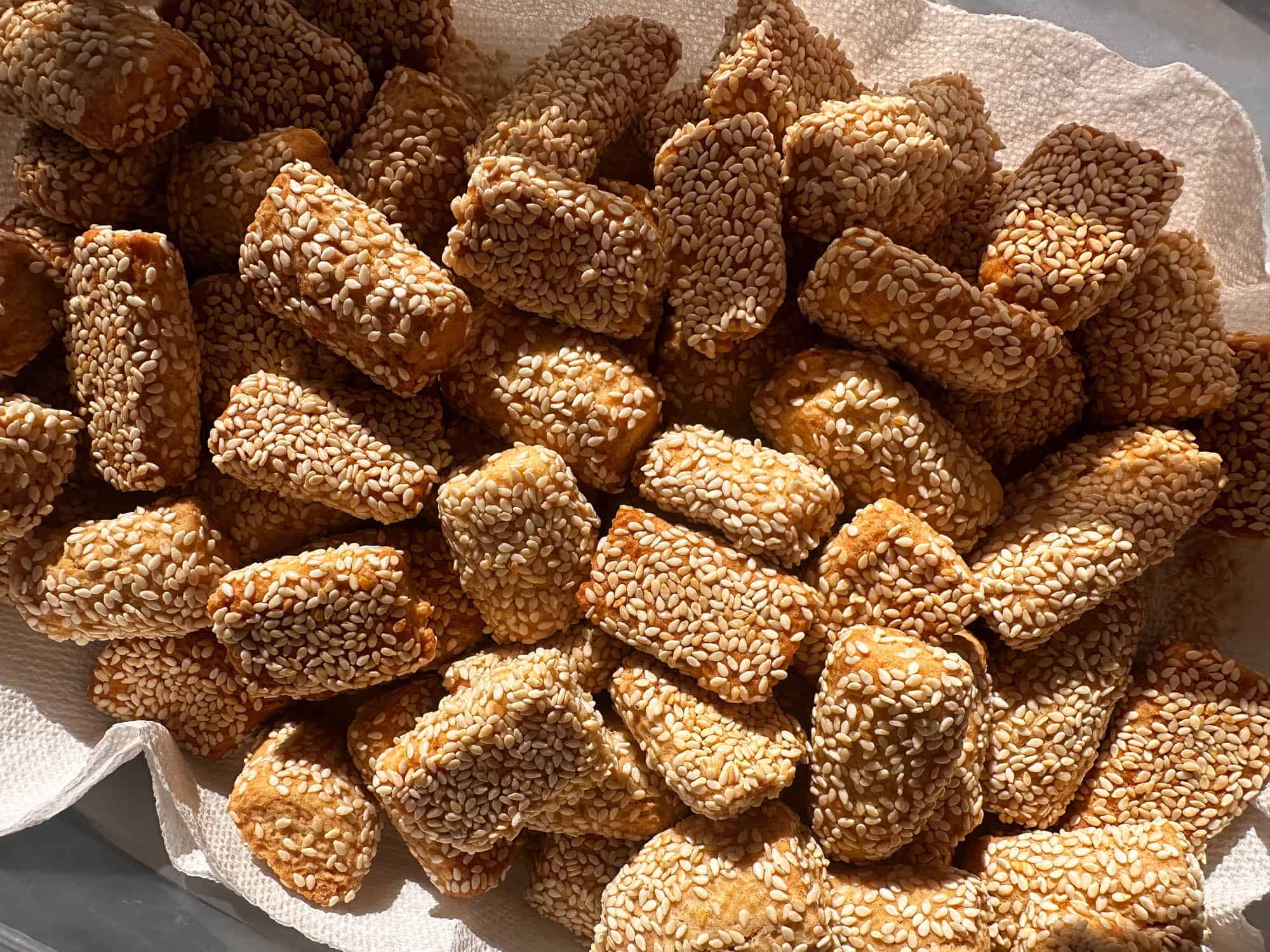
Mine sit in the middle. I kept the old-fashioned method of rubbing the fat into the flour by hand, but I used butter. I made them a little sweeter, too, with more vanilla, the way most of us here grew up eating them.
On my Christmas cookie tray, these sit next to pignoli cookies for a second nutty bite. Angela’s ricotta cookies offer a soft contrast, and Italian orange cookies add a touch of citrus. I also love to pair them with Italian wedding cookies (anginetti).
Why I Love These!
- Butter, the old-fashioned way. Rubbing the butter into the flour like pie dough gives these a short, crisp bite. I tested butter and Crisco side by side, and butter won.
- Just sweet enough. I tested these at the Italian recipe’s 160 g of sugar and at 1 cup (200 g). At 160 g the texture was perfect, but they weren’t quite sweet enough for me. At 1 cup, they were just right. The sesame is still the main flavor.
- No mixer, no chilling. All you need is a bowl and your fingertips. There’s no creaming, and you can shape the dough as soon as it’s mixed.
- Anise is optional. These are flavored with orange zest and vanilla, so they’re a safe pick for anyone who skips the anise cookies. If you love anise, it’s an easy swap.
- They keep. They stay crisp in a cookie tin for up to two weeks, so you can bake them ahead of the holidays.
Ingredient Notes
A full list of ingredients and measurements is in the recipe card.
- Butter. Sicilian bakeries make these with lard, and many Italian-American bakeries use shortening. I baked butter and Crisco side by side, using the same amount, and liked butter better. If you’d rather use Crisco, see Substitutions below.
- Sugar. One cup (200 g) of granulated sugar makes these noticeably sweeter than the Italian original, which uses about 160 g. If you like a traditional, lightly sweet dunking cookie, use 160 g.
- Baking powder. I use baking powder because it’s in everyone’s pantry. Use just ½ teaspoon. More leavening makes them puffy and cake-like, and you lose the crunch. For crunchier cookies, use baker’s ammonia, the traditional choice (see Substitutions below).
- Orange zest and vanilla. In Sicily, these are usually flavored with lemon zest, sometimes orange, and often vanilla. Italian-American bakeries here often use anise or almond instead. I use orange zest and a generous 1½ teaspoons of vanilla, which makes the cookies taste sweeter without adding sugar.
- Egg. Weigh it: you need 110 g of beaten egg, about 2 large eggs. Egg sizes vary, and a little extra makes the dough sticky.
- Sesame seeds. Use raw, hulled seeds. They toast as the cookies bake, so there’s no need to toast them first. Have extra on hand, since damp seeds clump in the bowl.
Substitutions
Crisco instead of butter. Use the same amount. I tested both, and Crisco works well. It’s closer to the shortening used in Italian-American bakeries, and the dough stays easier to roll, even when it’s cool.
Anise instead of orange. If you grew up on the anise sesame cookies from Italian-American bakeries, swap the orange zest for 1 to 1 1/2 teaspoons of anise extract and keep the vanilla. Anise oil is much stronger than extract, so if you use it, start with just a few drops.
Baker’s ammonia instead of baking powder. Baker’s ammonia (ammonium bicarbonate, sometimes sold as ammonium carbonate) is the leavener Sicilian bakeries traditionally use for these cookies. At the time of this writing, you can find it at Michael’s in the baking aisle.
- What it does: It breaks down completely in the oven, so it leaves no residue or aftertaste. I baked both side by side. Both were fantastic, but the cookies made with baker’s ammonia were much crunchier.
- How much: Use ½ teaspoon, the same amount as the baking powder. I tested it one for one.
- How to use it: Crush any lumps and dissolve it in the cold milk before adding the milk to the dough, so it’s evenly mixed.
- The smell: Your kitchen will smell like ammonia while the cookies bake. That’s normal, and it bakes off completely in a small, crisp cookie like this one. Don’t use it in soft or thick baked goods, where the smell can stay.
- Storage: Keep it tightly sealed. It loses strength when exposed to air.
Overview of the Method
These are made the old-fashioned way, by rubbing the butter into the flour by hand, the same way you’d start a pie crust. The fat coats the flour and keeps gluten from forming, which gives these cookies a short, crisp snap instead of a chewy or cakey bite.
- Make a well. Whisk the flour, salt, and baking powder in a large bowl, then push them to the sides to make a well in the center.
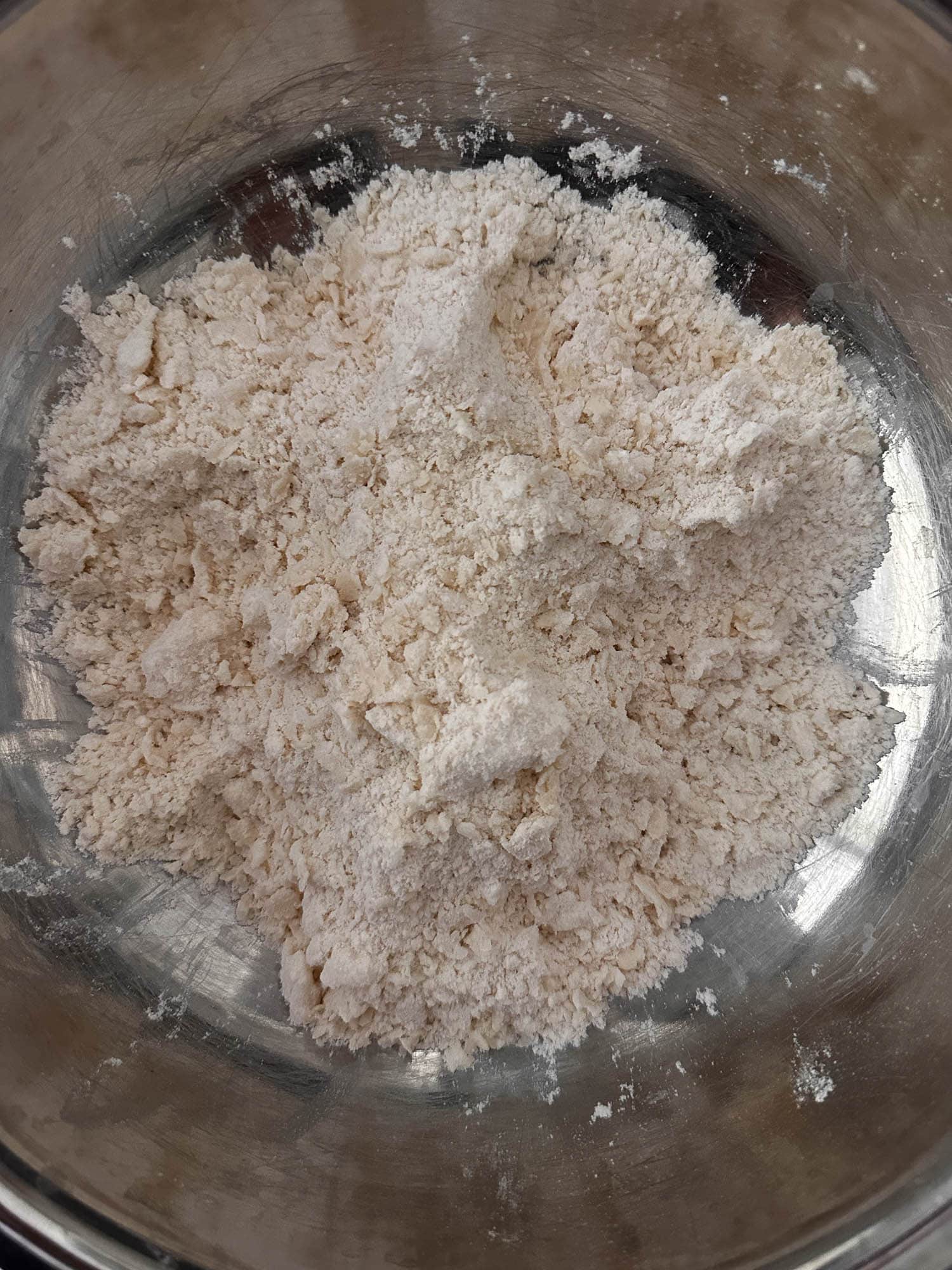
- Rub in the butter or shortening. Add the fat and pinch and rub it into the flour with your fingertips until the mixture looks like coarse, sandy crumbs, with no big lumps of fat left.
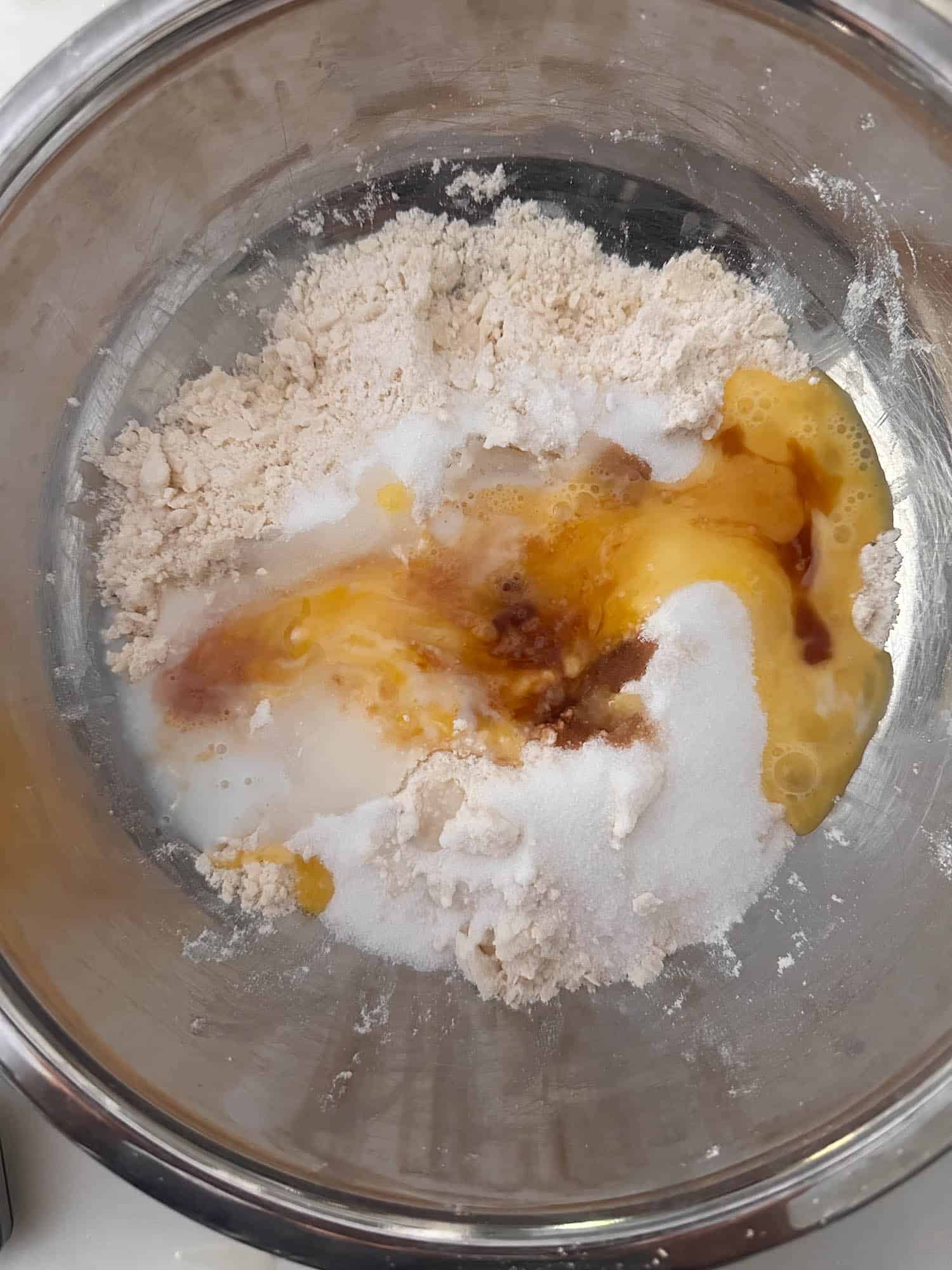
- Add the wet ingredients. Mix in the sugar. Add the eggs, then the milk, vanilla, and orange zest, and stir until it starts to clump.
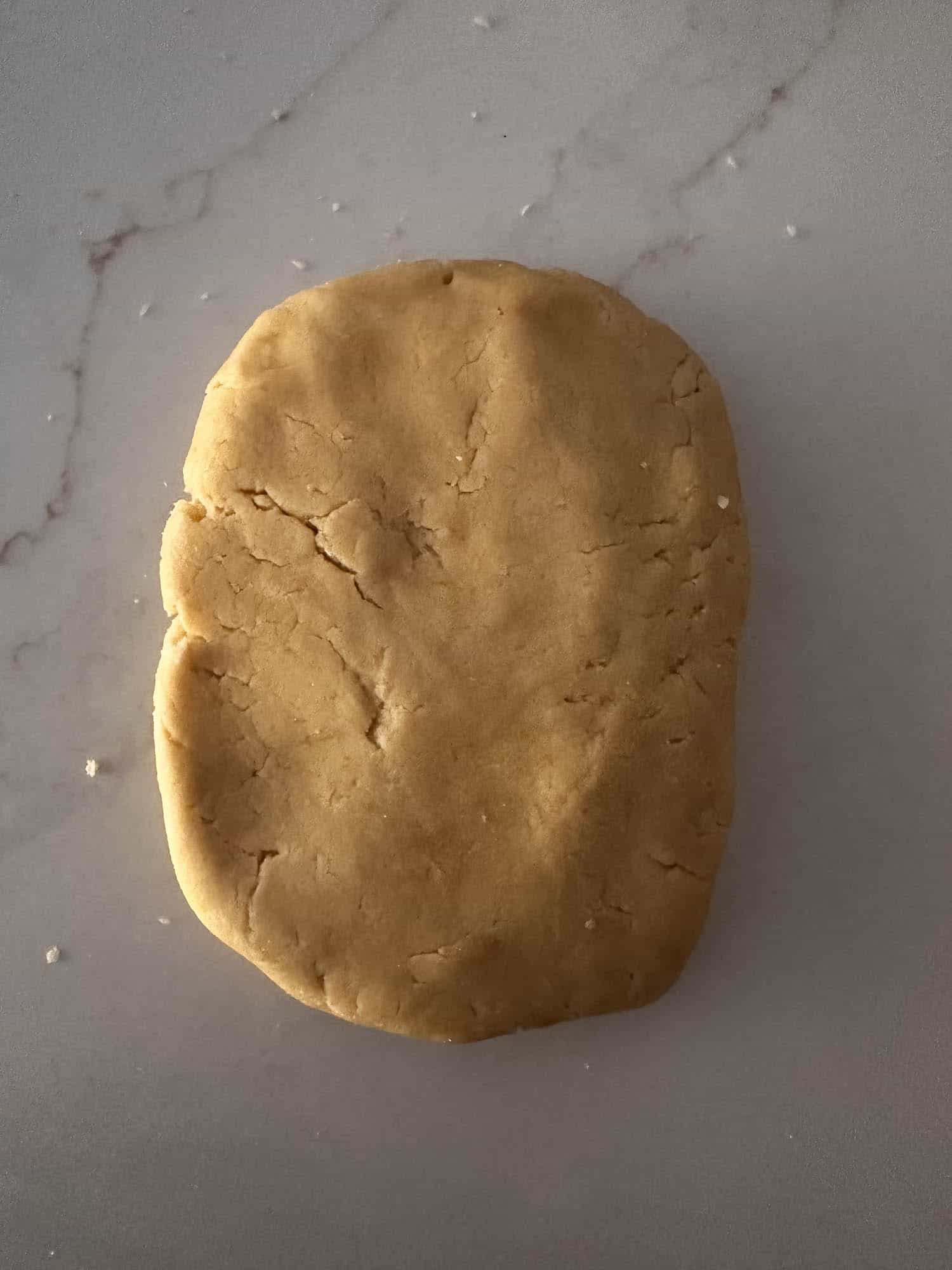
- Knead briefly. Turn the dough onto the counter and knead just until it comes together and looks smooth. Overworking it makes the cookies tough.
- Shape. No chilling needed. The dough rolls best at room temperature. Squeeze a piece of dough in your fist to press it into a rough log, then roll it into a rope about ¾ inch thick and cut it into 2-inch pieces.
- Coat. Dip each piece in water, then roll it in sesame seeds.
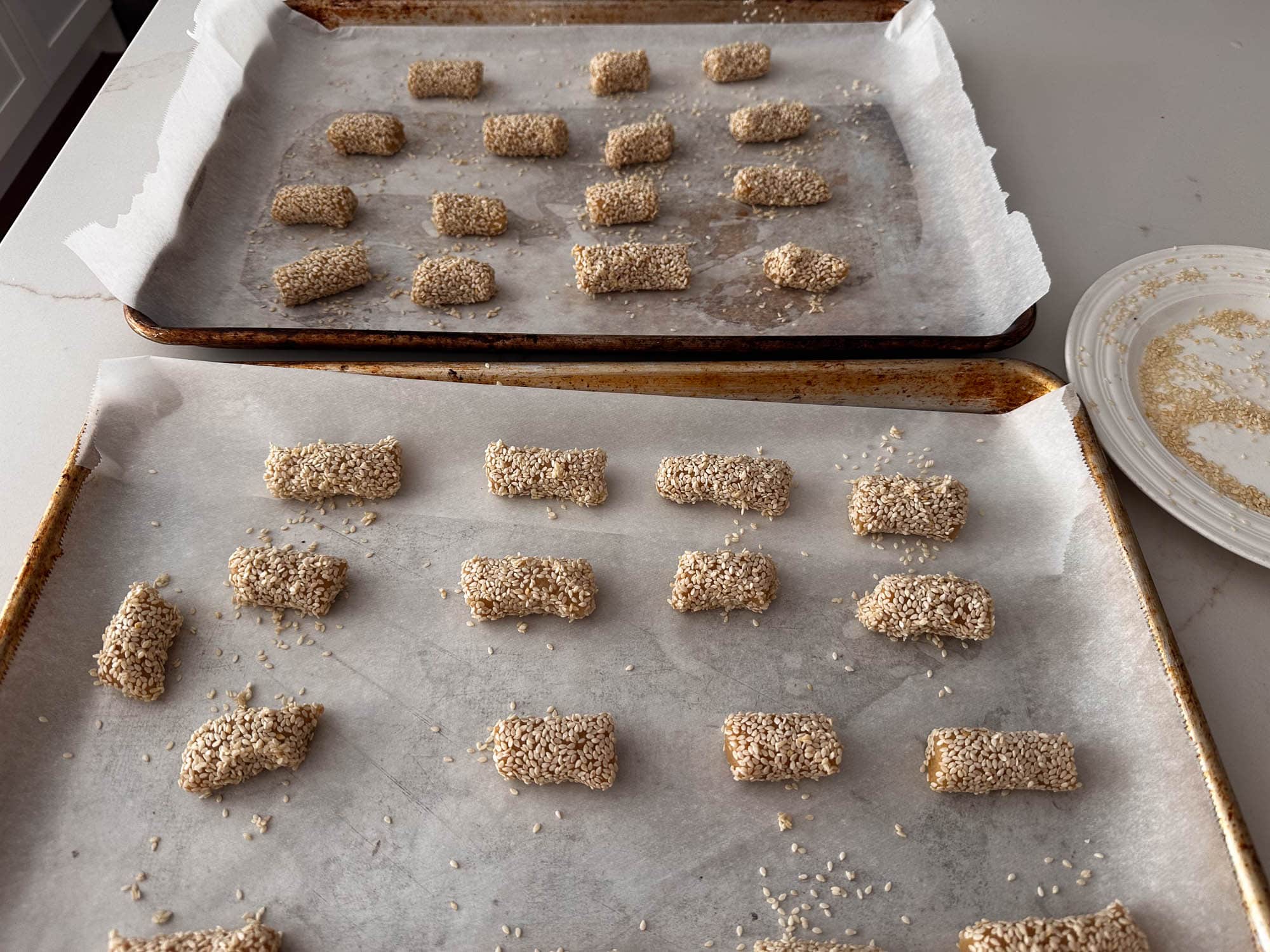
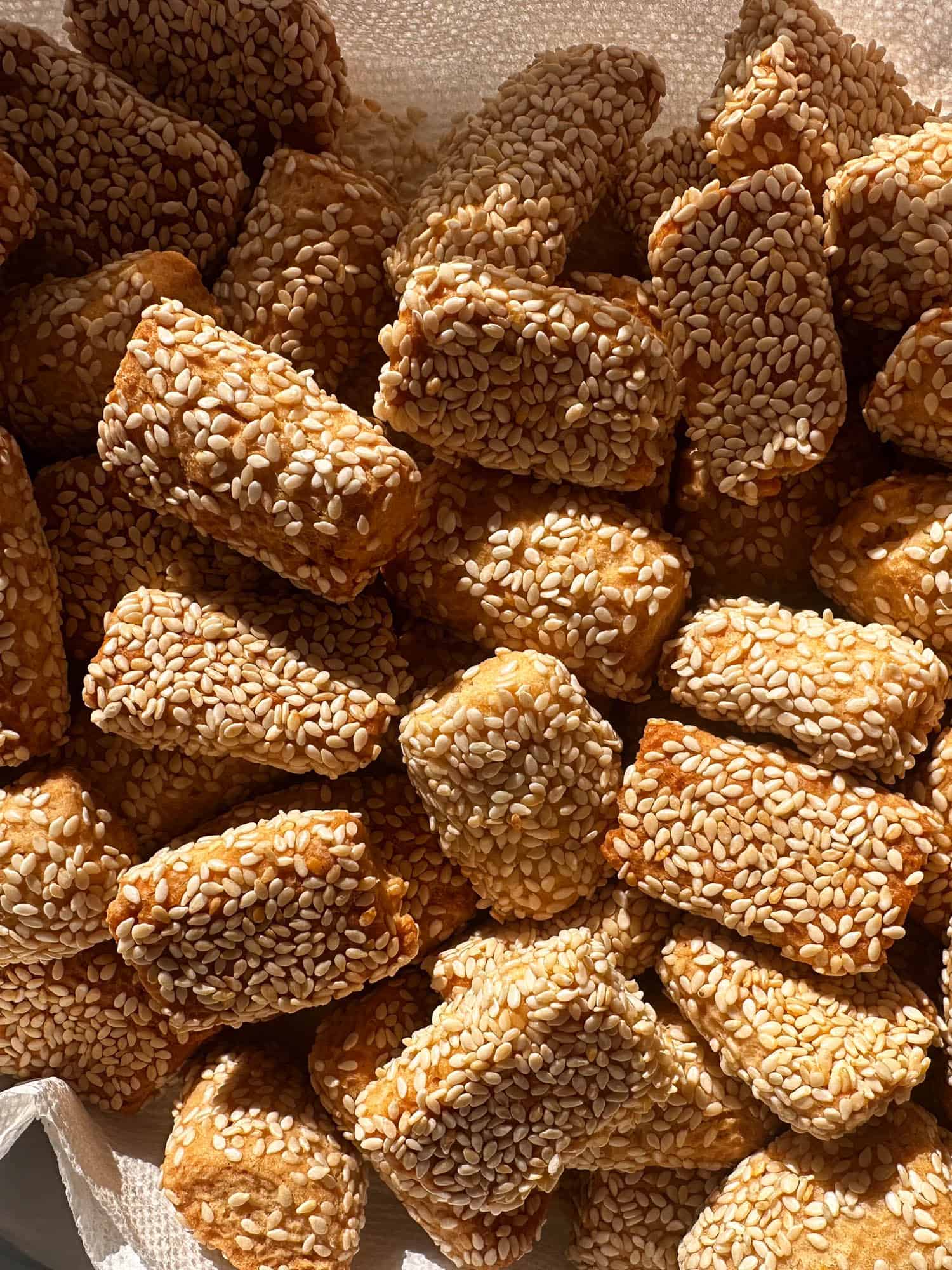
- Bake. Bake at 350°F until golden on top, then let them cool completely on the pan. They get crunchier as they cool.
Tips and Techniques
This dough handles like pie dough, not cookie dough. It won’t roll smoothly straight from the bowl. You have to squeeze it first, then roll. If it cracks while you shape it, it’s working the way it should, so just press it back together.
- Keep the dough at room temperature. Cold butter dough is stiff and tough to roll, so shape it soon after mixing. (Crisco dough stays easier to roll when it’s cool.)
- Too soft? Chill it. If the dough feels soft or greasy, for example on a warm day, refrigerate it for an hour. Let it sit on the counter until it’s pliable again before you roll it.
- Squeeze, then roll. Squeeze a piece of dough firmly in your fist a few times until it holds together as a rough log. Then set it on the counter and roll it into a rope. The squeeze presses the crumbs together so the rope doesn’t split.
- Roll on a bare counter. Skip the flour. A little grip helps the rope stretch instead of sliding and splitting.
- Roll from the middle out. Use your palms and light, even pressure, and move your hands toward the ends as you go.
- Work one piece at a time. Keep the rest of the dough covered so it doesn’t dry out.
- If a rope keeps breaking, go short. Squeeze a short, thick log, cut the pieces, then roll each piece to shape.
- If the dough is truly crumbly, add milk 1 tablespoon at a time, only until it holds together. Flour varies, so some days it needs a splash more.
- Add seeds a little at a time. Put a few spoonfuls of sesame in the bowl at once, since damp seeds clump. The water dip also seals small cracks.
- Bake by time, not just color. With the extra sugar, these brown a little faster. Start checking at 20 minutes and pull them when the tops are golden and the cookies feel firm.
- Use a regular oven setting, not convection, and space the cookies well apart. You’ll likely need two batches.
Make Ahead and Storage
These are built to keep. Store them in a tin, not a plastic container, so they stay crisp.
- In a tin: Up to 2 weeks at room temperature. Let them cool completely before storing, or the steam softens them.
- Frozen: Freeze baked cookies in an airtight container or freezer bag for up to 3 months. Thaw at room temperature, still covered, so condensation doesn’t form on the cookies.
- Make the dough ahead: Wrap it tightly and refrigerate for up to 3 days, or freeze for up to 2 months. Thaw frozen dough overnight in the fridge. Either way, let it come to room temperature before rolling, since cold butter dough is tough to shape.
- If they soften: Re-crisp them on a baking sheet at 300°F for 5 minutes, then cool completely.
♥️ Loved this recipe? I’d be thrilled if you’d rate it ⭐️ and share your experience in the comments below! Your ratings and comments help other readers discover this recipe and keep this blog going. Did you add any special tweaks? Our community of home cooks would love to hear about it! ♥️
📖 Recipe
Italian Sesame Cookies (Reginelle)
Click the heart icon ♡ above to save a recipe. To find your saved recipes later, click the heart icon on the right side of the screen near the search icon and select My Favorites.
Ingredients
For the Dough
- 4 cups (500 g) All-purpose flour
- 1/8 tsp Fine salt pinch
- 1/2 tsp Baking powder
- 11 tbsp (154 g) Unsalted butter room temperature
- 1 cup (200 g) Granulated sugar
- 2 large (110 g) Eggs beaten
- 1/4 cup (60 g) Cold milk plus more if needed
- 1 1/2 tsp Vanilla extract
- Orange zest from 1/2 orange (see Notes to substitute anise)
To Dip
- 2 cups (300 g) Sesame seeds raw
- 1/2 cup (118 g) Water for dipping
Instructions
- Whisk the flour, salt, and baking powder in a large bowl. Make a well in the center.
- Add the butter to the well and rub it into the flour with your fingertips until it looks like coarse, sandy crumbs.
- Mix in the sugar. Add the eggs, then the milk, vanilla, and orange zest. Stir until the dough starts to clump. If it's too crumbly to come together, add milk 1 tablespoon at a time.
- Turn the dough out onto the counter and knead just until smooth. Don’t overwork it.
- If the dough is too soft or greasy to roll, wrap and refrigerate for 1 hour, then let it sit at room temperature until pliable.
- Heat the oven to 350°F (conventional, not convection). Line two baking sheets with parchment.
- Divide the dough into 8 pieces. Squeeze each piece firmly in your fist to press it into a rough log, then roll it into a rope about ¾ inch (2 cm) thick and cut it into 2-inch (5 cm) pieces.
- Dip each cookie in water, then roll it in sesame seeds. Add seeds to the bowl a few spoonfuls at a time.
- Space well apart on the pans. Bake for about 25 minutes per batch, checking at 20 minutes, until golden on top and firm.
- Cool completely on the pan. They crisp up as they cool.
Notes
- Dough cracks while shaping: That’s normal for this dough. Squeeze each piece in your fist before rolling, and press any cracks back together. See the shaping tips in the post.
- Anise version: Replace the orange zest with 1 to 1½ tsp anise extract. For a little extra anise flavor, add 1 to 2 tsp lightly crushed anise seeds, like in my pizzelle.
- Baker’s ammonia: For crunchier cookies, use ½ tsp in place of the baking powder, dissolved in the cold milk. At the time of this writing, it’s sold at Michael’s.
- Storage: Keep in an airtight tin at room temperature for up to 2 weeks, or freeze for up to 3 months.
Nutrition
Recipe updated October 2026: I’ve completely reworked this recipe. My original version was good, but after testing a more traditional Sicilian method side by side, these are amazing!
I’m giving this 5 stars after just reading the recipe- thank you.
Sorry to even ask but here goes. Since I’m feeling a bit lazy perhaps I’m wondering if I can go ahead and make them in the stand mixer, just not over mixing? What do you think will happen to the dough? Thanks a lot!
I haven’t tried it, but I don’t see why not, as I’ve done pie crust with a mixer. I’d use the paddle on low to work the softened butter into the flour, stopping now and then to rub out any lumps with your fingertips, until it looks like coarse sand. Add the remaining ingredients on low just until the dough starts to clump. It will probably still be crumbly, so squeeze it together with your hands and knead briefly to help it come together.
Thanks for replying!