
The Classic Philly Italian Hoagie
This post may contain affiliate links. For more information, please see our disclosure policy.
A hoagie is Philly’s version of a sub—an Italian-American sandwich stuffed with Italian cured meats and cheese, with lettuce, tomato, and sometimes onion, on a long hoagie roll. Born in South Philly’s Italian neighborhoods (some report it was born in Delco – a suburb of Philly), this sandwich has been perfected over decades by people who know what they’re doing.
Philadelphia’s best Italian hoagie is always a subject of debate – I’d say it often depends on the bread and how stuffed it is. I don’t love an overstuffed sandwich, but to each his own, as they say!
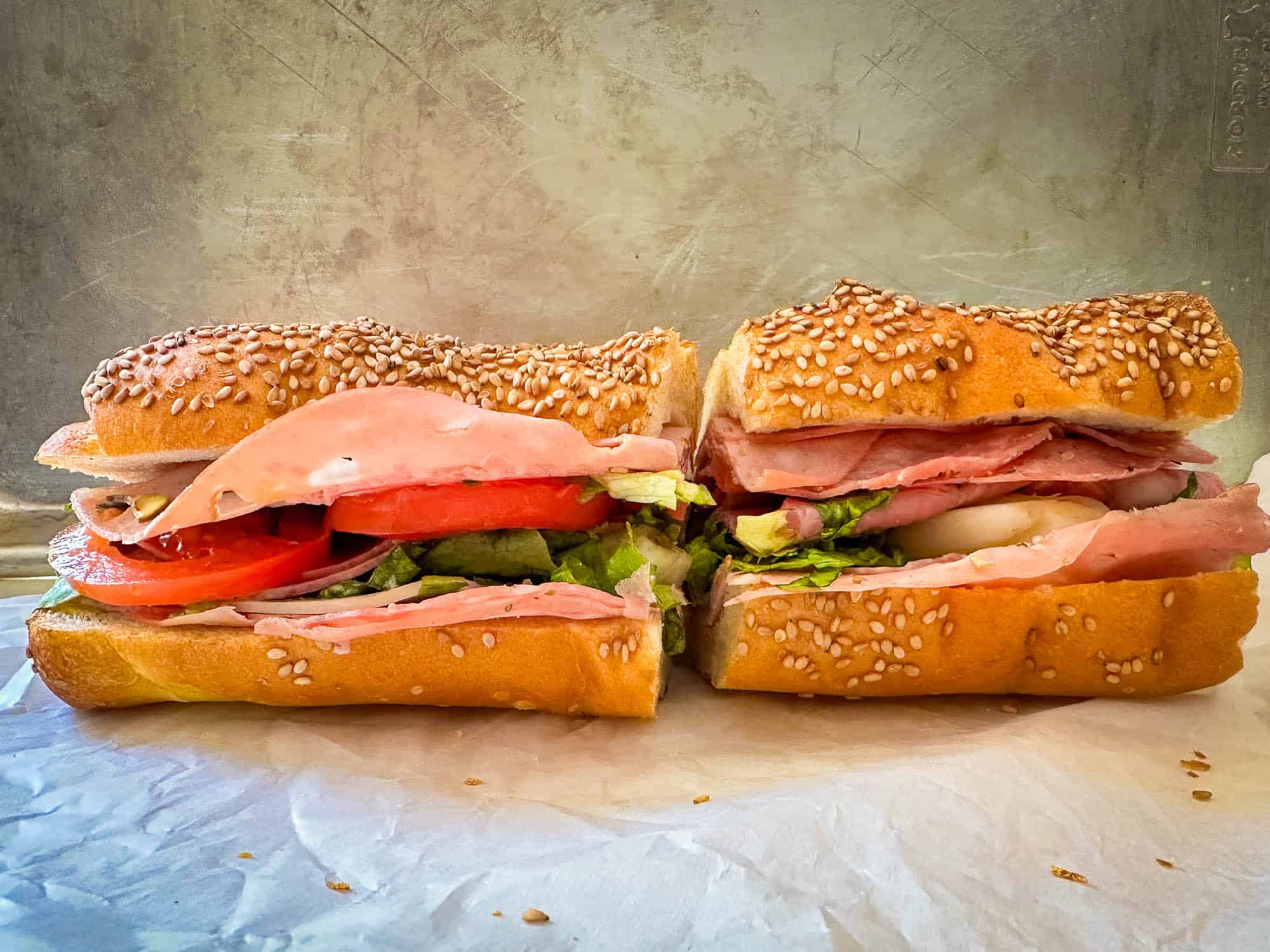
The Ingredients
A great Italian hoagie starts with fresh, high-quality ingredients. While every deli has its own combination, these are the classic components you’ll find on a traditional Philly Italian hoagie.
Hoagie Rolls
The bread is arguably the most important ingredient. Look for an 8- to 12-inch Italian hoagie roll with a thin, crisp crust and a soft, chewy interior. Seeded rolls are traditional, though unseeded are also common. The roll should be sliced lengthwise but left hinged. No good bread nearby? Bake your own hoagie rolls!
Italian Meats
Italian lunch meats showcase Italy’s diverse charcuterie traditions. Together in sandwiches like hoagies, a mixture of meats creates a perfect blend of Italy’s savory heritage. Here are some typical meats found in an Italian hoagie. Pick three or four of these, as most Italian hoagies combine a few meats for the best balance of flavor.
- Mortadella: Mild, silky, and slightly sweet, often studded with pistachios.
- Prosciutto: I prefer Prosciutto di Parma or Prosciutto di San Daniele, which have a rich, buttery flavor and delicate texture. In my opinion, they’re worth seeking out because some domestic versions can be overly salty. The air in parts of Italy is key to producing this meat.
- Coppa (Capocollo, Capicola, or “Capi”): Rich, dry-cured pork with just the right amount of marbling. Available in mild or hot varieties.
- Genoa salami: Coarsely ground and seasoned with garlic, pepper, and wine for bold, savory flavor.
- Soppressata: A slightly firmer salami that’s tangy, peppery, and available in sweet or hot versions.
Cheese
Sharp provolone is the traditional choice, though mild provolone is common as well. Some shops also offer Cooper Sharp or American cheese if you prefer.
Vegetables
- Finely shredded iceberg lettuce
- Thinly sliced ripe tomatoes
- Paper-thin sliced onions (optional)
- Hot or sweet peppers, if desired
Dressing
The classic finishing touch is:
- Extra virgin olive oil
- Dried oregano
- Salt
- Freshly ground black pepper
Some people like to add mayonnaise or a splash of red wine vinegar, but neither is considered traditional on a classic Philadelphia Italian hoagie.
How to Build a Classic Italian Hoagie
It starts with the roll—that’s nonnegotiable. Layer the meats first, followed by the cheese. Top with shredded lettuce, tomatoes, onions, and any peppers if you’d like. Finish by drizzling the vegetables (not the bread) with olive oil and sprinkling on oregano, salt, and pepper. Dressing the vegetables instead of the bread helps prevent a soggy sandwich while keeping every bite fresh and flavorful.
Can you add mayo? Sure—it’s not traditional, but these sandwiches are customizable. And if you’re from NY, you might want vinegar too, but that’s not a classic hoagie dressing either.
Most places scoop out some of the bread’s interior to make room for the fillings. When it’s done right, every bite has that perfect balance of salty meat, sharp cheese, and crisp vegetables—all held together by bread that can handle the job.
Watch How It’s Made
Italian Hoagie vs. Sub?
It’s the small differences that distinguish a Philadelphia Italian hoagie from its cousin, the Italian sub—even though they can be very similar.
To sum it up: the classic Italian hoagie (not customized) is made on a long Italian hoagie roll or a piece of seeded Italian bread, left hinged when cut, and typically filled with specific Italian cold cuts, mild or sharp provolone, shredded iceberg lettuce, sliced tomatoes, onions, and simply dressed with oil, salt, pepper, and oregano. That combo sets it apart from other subs.
Some rebels may opt for mayo (you know who you are) or a splash of vinegar, but most classic Italian hoagies don’t contain this by default.
It’s All About the Bread (IYKYK)!
You can’t have a great hoagie without great bread, and Philly’s bakeries know how to deliver. The city’s hoagie roll tradition runs deep, thanks to family-owned bakeries that have been perfecting their craft for generations. Some local groceries, delis, or produce markets carry bread from the following bakeries:
- Sarcone’s Bakery (est. 1918) on South 9th Street is a South Philly institution known for its brick oven rolls.
- Carangi Baking Company (since 1996) on South Iseminger Street supplies some of the city’s best hoagie shops.
- Cacia’s Bakery, in business since 1953, operates in South Philly and several New Jersey locations.
- Liscio’s Bakery in Glassboro, NJ, makes soft, chewy 9–11 inch rolls beloved by sandwich shops.
- Amoroso’s (founded in 1904) and Aversa’s round out the list, each with a loyal following.
Did I leave any off the list? Let me know! Locals will argue about who bakes the best roll, but one thing’s for sure: the bread makes the hoagie. Not in Philly? Try making your own hoagie rolls!
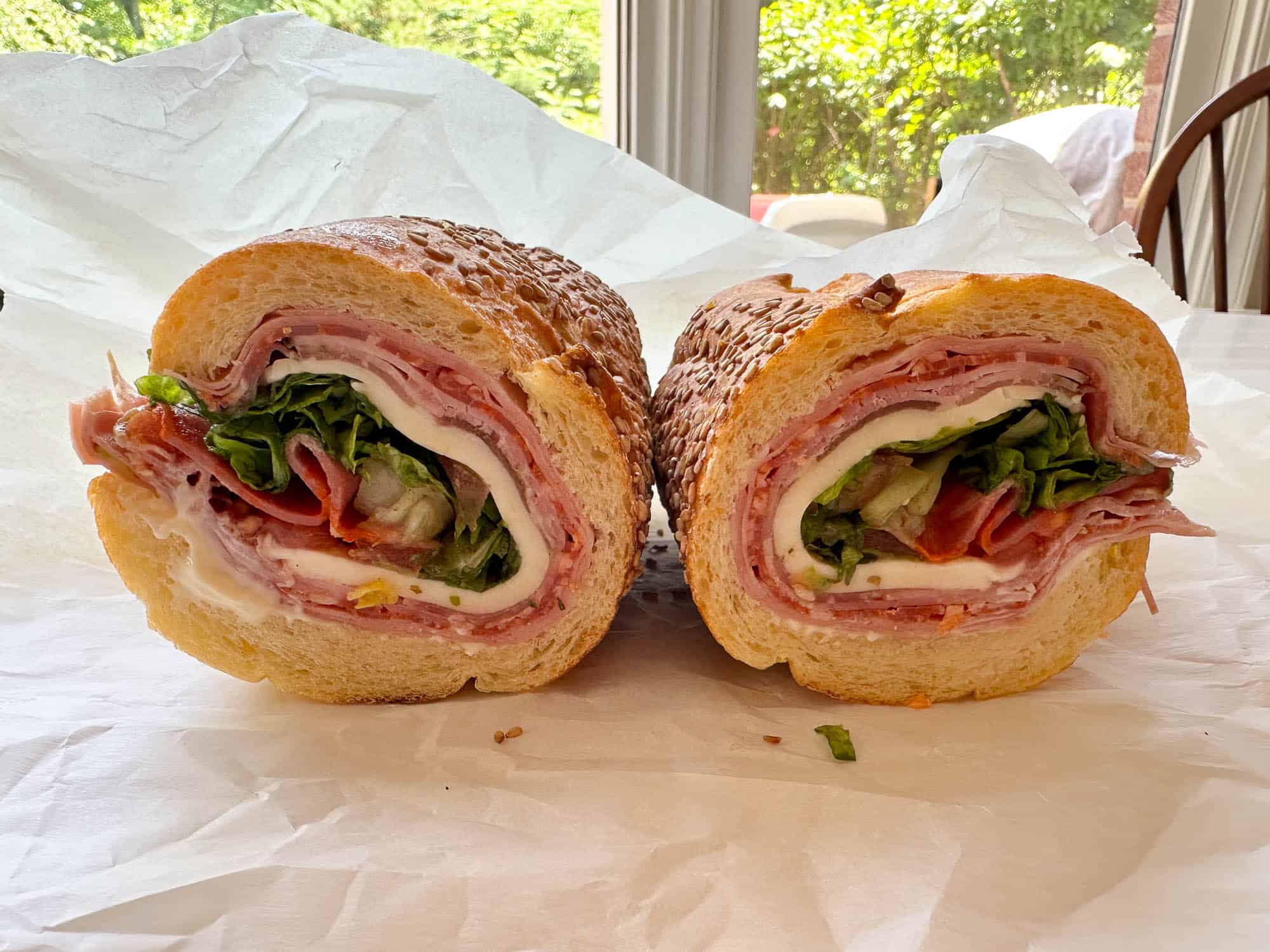
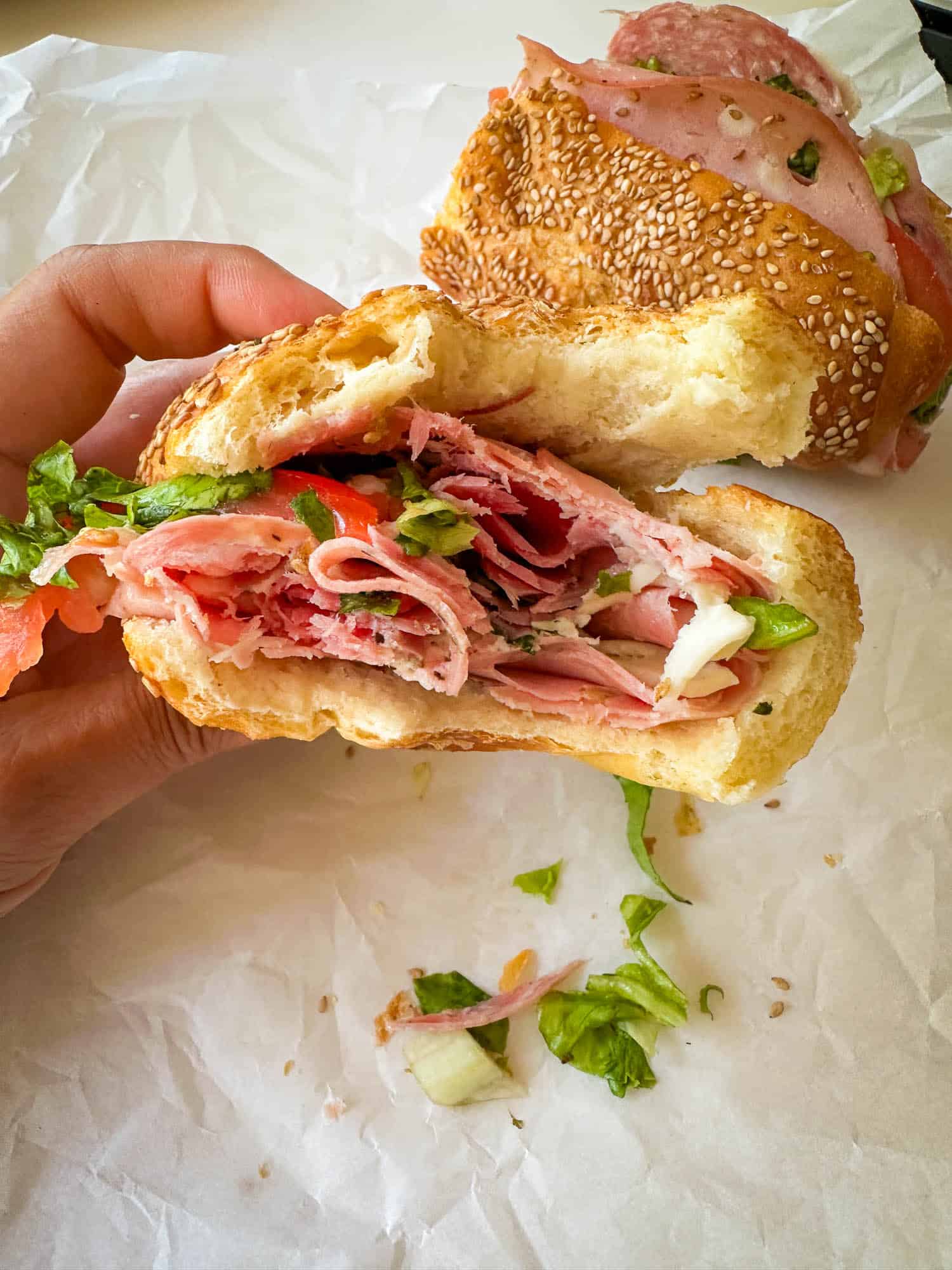
Top Tips
- Use fresh, high-quality ingredients for the best flavor.
- Bread is the foundation—get fresh rolls from a local bakery.
- Choose premium Italian meats and cheeses, sliced thin.
- Layer cheese between meats and veggies to reduce sogginess.
- Dress the veggies, not the bread, to prevent sogginess.
- Customize ingredients and seasonings to your taste.
- Enjoy immediately for best texture and flavor.
♥️ Loved this recipe? I’d be thrilled if you’d rate it ⭐️ and share your experience in the comments below! Your ratings and comments help other readers discover this recipe and keep this blog going. Did you add any special tweaks? Our community of home cooks would love to hear about it! ♥️
📖 Recipe
The Italian Hoagie
Click the heart icon ♡ above to save a recipe. To find your saved recipes later, click the heart icon on the right side of the screen near the search icon and select My Favorites.
Video
Ingredients
For the Bread
- 2 medium hoagie rolls 8 to 9 inches long, sliced but left hinged (scooped optionally)
Meats and Cheeses (see Note)
- 1/4 pound genoa salami thinly sliced (1/4 pound = 4 ounces)
- 1/4 pound capicola thinly sliced (1/4 pound = 4 ounces)
- 1/4 pound mortadella or prosciutto thinly sliced
- 1/4 pound provolone cheese sliced
For the Toppings and Seasoning
- 2 small tomatoes thinly sliced
- 1/4 small onion yellow, white or red; thinly sliced
- 1/2 cup iceberg lettuce shredded finely
- 1/4 teaspoon dried oregano
- 1/4 teaspoon black pepper
- 1/4 teaspoon salt optional, depending on the saltiness of the meats
- 1 to 2 tbsp olive oil
Optional Toppings
- jarred sweet or hot peppers, such as pickled cherry peppers or Italian long hots consider making Italian roasted long hots)
Instructions
Prepare the Bread:
- Slice the hoagie rolls lengthwise, leaving a hinge on one side. If you'd like, scoop out a bit of the crumb to create more room for the toppings.
Assemble the Hoagies:
- Layer the meats (e.g., Genoa salami, capicola, and mortadella, etc) evenly on the bottom half of the rolls.
- Add the provolone cheese slices on top of the meats.
Add the Vegetables:
- Add tomato slices, followed by lettuce and onions, covering the meats and cheese completely.
- Drizzle the olive oil over the vegetables, then sprinkle a pinch of dried oregano, and add salt (optional) and black pepper on top. You may also add some hot or sweet peppers (jarred pickled).
Finish and Serve:
- Carefully close the hoagie by pressing the top half onto the vegetables.
- Optionally, you can wrap the hoagies in parchment paper or plastic wrap to hold them together and make them easier to eat.
Notes
Nutrition
❓ Frequently Asked Questions
What is a Philadelphia hoagie?
A long Italian roll filled with cold cuts, cheese, lettuce, tomato, onion, and seasoned with oil, salt, pepper, and oregano. It’s distinct from other subs thanks to its ingredients and prep style.
What kind of bread should I use?
Use a genuine Italian hoagie roll—8–12 inches long, crusty outside, soft inside.
What meats and cheeses are traditionally used in an Italian hoagie?
- Capocollo, salami, Soppressata, imported ham, mortadella, and provolone or American cheese
How do I prepare the vegetables?
- Lettuce: Thinly shredded iceberg
- Tomatoes: Sliced about 1/4 inch thick
- Onions: Paper-thin white or yellow
- Hot peppers (optional): Cherry or banana peppers or long hots
What’s the proper dressing?
Extra virgin olive oil, salt, pepper, and dried oregano. No vinegar in the classic version.
How do I assemble the hoagie?
- Slice roll lengthwise, leaving it hinged
- Layer meats and cheese
- Add lettuce, tomato, onion
- Drizzle oil and seasonings on top of the veggies
- Close and wrap tightly
Should I toast the bread?
Nope. Philly hoagies use untoasted bread. Toasted versions are called grinders.
How much filling should I use?
Use about 4–6 oz of meat and 2–3 oz of cheese per sandwich. Don’t overstuff.
Can I make it ahead?
A few hours ahead is fine, but wait to add tomatoes and dressing until right before serving. Wrap tightly in paper or foil.
What makes it different from other subs?
Philly Italian hoagies stand out for their hinged roll, specific cold cuts, shredded lettuce, and oil/oregano dressing.
Comment Policy
I’d love to hear from you! Questions, tips, and respectful feedback are always welcome! Comments that are abusive, disrespectful, or intended to provoke may not be approved. (Updated 6/25/2026)