
The Best New York Style Pizza Dough and 14 Tips for Success!!
This post may contain affiliate links. For more information, please see our disclosure policy.
This NY style pizza dough recipe has been winning over home pizza makers for nearly 15 years, earning rave reviews from professional pizzaiolos and native New Yorkers alike. Many years ago, my own quest for the perfect crust lead me to this tried-and-true formula based on wisdom from the pizza masters at www.pizzamaking.com and the late great Dough Doctor, Tom Lehmann. With thousands of successful bakes and countless testimonials from both pros and Big Apple natives who say “this is the real deal,” this recipe continues to help home bakers achieve that authentic New York pizzeria experience in their own kitchens.
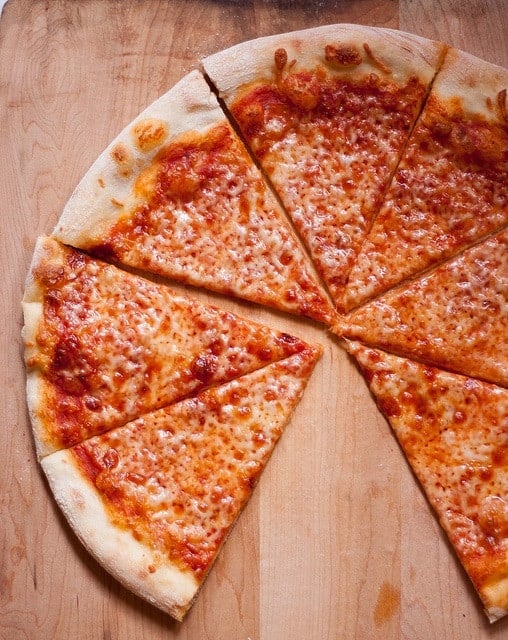
Important Variables
Making NY style pizza dough is definitely somewhat of an art form. There are so many variables that can be changed aside from the ingredients alone. For example, these variables include:
- oven temperature
- temperature of the water used to make the dough
- proofing methods (room temp vs cold rise)
- order of adding the ingredients (yes, this makes a big difference!)
- mixing time
- use of autolyse
- use of poolish (I don’t do this or the one before, although I have in the past)
And then of course, the toppings which can be simple or as complex as you’d like. But don’t worry too much about all of this – my method is easy and straightforward. Plus, you will make better dough than 99% of the pizza chains out there. You will not want take out anymore!
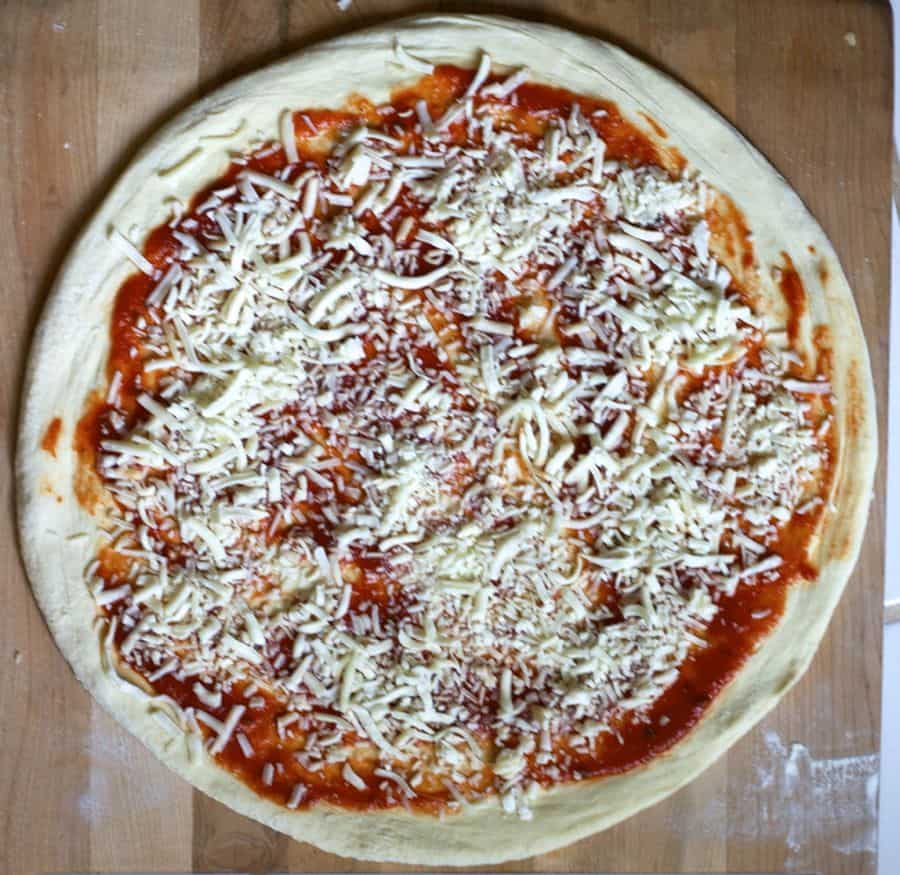
The Big Secret (How You Proof the Dough)
My all-time favorite dough is NY style dough, which really is classic pizza dough that is stretched out into a thin crust pizza. This type of pizza dough contains water, flour, salt, instant yeast, and olive oil (and sugar especially when baking in a home oven, to help browning).
After it is mixed, it is proofed (left to rise/ferment) in the refrigerator for a minimum of 24 hours and up to 72 hours (it can also be frozen) – this is the big secret. I’ve used the dough up to 5 or 6 days afterwards, so you can essentially prepare dough for the week.
This recipe produces a crisp yet foldable crust that is tender, light, and flavorful and will make enough for four 14-inch pizzas. You can easily double or half the recipe to make 2 or 8 pizzas.

Fourteen Tips for Success
Tip 1: Choosing the flour
Use high-quality flour – I like to use King Arthur’s all purpose or bread flour; higher protein (ie, bread) flours work best. However, I prefer all-purpose flour because I like a lighter, airy crust.
Tip 2: Adding the yeast
Do not add instant dry yeast (IDY) directly to cold or cool water – you may shock the yeast (add the IDY to your flour instead) (please note that IDY differs from active dry yeast, which must be activated by adding it to water).
Tip 3: How much yeast?
Use only enough yeast to “get the job done” – yeast eats the sugar in your flour to produce its leavening effects – I find that if you use too much, your dough will be tasteless (this is just my opinion); however, it is a fact, that too much yeast can make your dough taste bad. Most recipes out there, some of them in well known, published books contain too much yeast!
Tip 4: Cold ferment that pizza dough!
Always use your refrigerator. The best NY style doughs “ferment” or “cure” in the refrigerator for at least 24 hours and up to 48 72 hours. This is called a “cold rise” (vs warm rise on your kitchen counter).
The refrigerator is used to retard (or slow) the dough’s fermentation, allowing that distinctive flavor to come through (ever wonder why some pizza crust tastes different than others, despite the fact that they are both made from just about the same exact ingredients? – this is a big reason why!)
When your dough rises too quickly, the flavor will not develop optimally. Slow rise = MUCH better flavor.
Tip 5: Weigh those ingredients!
Use a scale to weigh the flour instead of using a measuring cup – it is much more accurate and will yield superior results. I’ll admit, I resisted doing this for a loooong time. Just do it. You’ll be glad you did and your dough will be more consistent and much improved.
Tip 6: Add oil last
Mix the oil in as the last step, after the flour has all been incorporated. This is important to allow the flour to hydrate properly.
Tip 7: Flour your dough balls
Before tossing or opening your dough balls, flour them *very* well on each side (if you are a beginner) to ensure they do not stick to your counter or pizza peel. I sometimes use a bit more flour after I begin spreading them.
Tip 8: Keeping those rims a bit puffy
Take care not to “degas” the rim of your pizza as you are spreading your dough! Do NOT ever use a rolling pin! There are many different methods to spread/open your dough ball. I hope to add a few pictures someday of this process.
Tip 9: Baking pizza in a home oven
Ensure that your oven is preheated for a sufficient amount of time (about 1 hour) and bake the pizza within 6 to 8 inches of the top of your oven (ie, your broiler) so that the tops browns sufficiently in conjunction with the bottom of the pizza.
Do not place the stone near the bottom of your oven. I made this mistake for too many years.
After your stone has been preheated sufficiently, the heat from the stone will cook the pizza from the bottom and you can switch the broiler on if you find you need more browning on the top (I now use the broiler to bake my pizzas…more on this sometime in the future).
If you find that your cheese is browning well before your rim attains sufficient color, use partially frozen cheese (ie, place shredded cheese in the freezer while the oven is heating up) and cold sauce or you can drizzle just a bit of olive oil on top of cheese.
Tip 10: Use a pizza stone or steel
Use a pizza stone if you have one. The stone with draw moisture out of the dough and produce a beautifully crisp crust. I use a pizza steel because my stones kept breaking.
Tip 11: Use just the right amount of sauce
Do not use too much pizza sauce – it will make your pizza soggy
Tip 12: Find the right kind of cheese
Do not use low fat cheese to top your pizza or pre-shredded cheese (the former will not melt sufficiently and the latter contains additives that prevent the cheese from sticking together and therefore does not melt very well). The best is low-moisture, whole milk mozzarella.
If you must use pre-shredded cheese, I’ve found that adding the sauce on top of the cheese helps with the melting. Also, do not use too much cheese; apply it sparingly so that you can achieve that mottled NY pizza appearance.
Tip 13: Flour your pizza peel
Use semolina or flour on the bottom of your pizza peel to prevent the pizza dough from sticking but be careful not to overdo it because it will burn.
Tip 14: Learn to launch that pizza
Give the pizza peel a few very small quick jerks to make sure the pizza will easily slide off your pizza peel before attempting to transfer pizza to the oven, and more importantly, rub flour into the peel before placing the dough on top.
Stretching the Pizza Dough
A nice video (from The GoodFellas Pizza School of NY), showing how to stretch the dough:
Freezing the Dough
- After mixing dough and dividing into balls, place dough in refrigerator for at least 24 hours.
- Place dough balls on baking sheet lined with plastic wrap or parchment paper, cover loosely with plastic wrap and freeze until firm (~ 2 to 3 hours or up to overnight).
- Wrap frozen dough balls individually in plastic and store in zipper-lock bags for up to 4 weeks.
- When ready to bake, transfer unwrapped dough into the refrigerator for 12 to 24 hours before making pizza.
- Bring dough to room temperature for 20 to 60 minutes before baking (less time for hot kitchen/summer and more time for cool kitchen)
Pizza Dough Calculator
Need more dough? Less dough? Try out our new Pizza Dough Calculator to calculate the weights to get it just right!
More questions? Please see my NY Pizza FAQ
♥️ Loved this recipe? I’d be thrilled if you’d rate it ⭐️ and share your experience in the comments below! Your ratings and comments help other readers discover this recipe and keep this blog going. Did you add any special tweaks? Our community of home cooks would love to hear about it! ♥️
The Recipe
📖 Recipe

The Best New York Style Pizza Dough
Equipment
- pizza stone or pizza steel for baking
- Standing mixer optional or hand knead
- kitchen scale highly recommended instead of volume measures
Ingredients
Original Recipe for Four 14-Inch Pizzas; want to make more or less? Use the pizza dough calculator
- 6.5 cups (796 g) all purpose flour or bread flour (weighing is most accurate!)
- 2 1/4 cups (493 g) water barely cold water (17.4 oz per 2 1/4 cups)
- 1 teaspoon (3.5 g) instant dry yeast
- 2.5 teaspoons (15.6 g) salt
- 2 teaspoons (7.8 g) sugar
- 1 tablespoon (11.8 g) olive oil
1 Pound of Dough (~454 grams) (use the pizza dough calculator to make more or less dough)
- 2 1/4 cups (274.5 g) all purpose flour or bread flour
- 3/4 cup (170.2 g) water
- 1/2 teaspoon instant dry yeast
- 1 teaspoon salt
- 3/4 teaspoon sugar
- 1 teaspoon olive oil
Instructions
Mixing the Dough
- Place water in mixing bowl.
- In a separate bowl, mix salt and yeast (and sugar if using) into flour
- Combine flour/salt/yeast mixture into water and mix until all the flour has been incorporated.
- After flour has been totally incorporated, add oil and knead for about 4 to 5 minutes (see note)
- Test final dough temperature, which should ideally be between high 70s to low 80s (optional)
Dividing and Rising
- Divide dough into 4 equal pieces (using a digital scale if possible; each ball should weigh 11.5 oz [~326 grams]), shape into a ball, and place in greased, sealed quart-sized container or oiled/greased freezer bag and refrigerate overnight or up to 72 hours (After much experimenting, I have concluded that I like 3 days best but day 2 is good too).
Assembly and Baking
- The following day, remove your dough balls within 1 hour or less of baking and allow the dough to come to room temperature. (the dough will tend to blister more if the dough has not been allowed to come to room temperature however, I often bake coldish dough without problems, just some bubbling)
- In the meantime, place your pizza stone in oven and preheat at 550 degrees (depending on thickness of your stone and your oven’s power) for at least 1 hour
- Open each dough ball using care not to degas, transfer to a pre-floured pizza peel (or on parchment paper), and top with your favorite sauce, cheese, or other toppings.
- Transfer pizza from peel to oven or slide parchment paper onto preheated pizza pan/stone and bake for 4 to 6 minutes each until browned on top and cheese has melted but not burned.
- Enjoy!
Notes
- Use of weight based measurements is highly recommended instead of US Customary. You will need a kitchen scale.
- METRIC amounts DO NOT correspond exactly to the US Customary amounts because, for example, 796 grams equals 6.4 cups (and most can’t measure 0.4 cups or 0.22 cups). Recipe was based on grams.
- Use the Pizza Dough Calculator
- If you want to use the dough the next day, knead a little more (slow speed for about 8 to 10 minutes)
- If you have time to let the dough rest for 3 days, knead for 4 to 5 minutes, low speed or hand knead.
- After mixing dough and dividing into balls, place dough in refrigerator for at least 24 hours.
- Then, place on baking sheet lined with plastic wrap or parchment paper, cover loosely with plastic wrap and freeze until firm (~ 2 to 3 hours or up to overnight).
- Wrap frozen dough balls individually in plastic and store in zipper-lock bags to store for up to 4 weeks (longer may work, but results might vary).
- Before using, transfer unwrapped dough into the refrigerator for 12 to 24 hours before making pizza.
- Bring dough to room temperature for 20 to 60 minutes before baking (less time for hot kitchen/summer and more time for cool kitchen).
- calculate your own using baker’s percentages: 62% hydration, 0.4% yeast, 2% salt, 1.5% oil, and 1% sugar or use my pizza dough calculator.
Day 2 crust is better tasting!! Excited to try instant yeast to compare. Today my dough stretching improved and the texture was much better! Thanks again. 🙂
Definitely! Slow, prolonged rise = very good flavor (same with bread like baguettes). Can’t take it too far though cause yeast will run out of food and dough will not rise. I’ve even had luck on day 3.
I love this blog post! This is my first time trying your recipe and I am wondering if my dough is rising okay in the fridge. It has been 24 hours and it looks pretty much the same as when I put it in the fridge yesterday. I did not have instant yeast, so used ‘regular’ and let the yeasty beasties get a running start multiplying in some warm water. I am going to try cooking off one dough ball this afternoon and let the rest fridge rise another 24 hours. Crossing my fingers — this has me salivating!! ♥ thanks!
Hi Jeannine – let us know how it turns out! The dough won’t look much different, but if it is in a clear container, and you flip it over, you will notice some bubbling effect. I’ll get a photo on the blog one of these days! I guess by “regular” you mean active dry yeast? That’s the type that is usually activated in water. Good luck!
Thanks for your speedy response Marie! You’re right — the dough was doing it’s thing alright! I made it for dinner and I am a fan! My pizza turned out pretty good considering the deviations I made from your recipe. Yes.. I used active dry yeast. Next batch I plan to use instant per your instructions. Also, I do not currently own a stone or scale and these items are on my list to acquire. Since my main oven is not working right now, I used my toaster oven which runs 25 degrees cool and the highest setting is 500 degrees. So this means my temp was a bit low. My pizza was a tad chewy — however the flavor was great! And somehow even the cheese tasted better on this crust. Also since I don’t have a stone, I baked it on a sheet and halfway through pulled the tray and let it finish baking on the wire rack. I think maybe between using a pan instead of a stone and the lower temp contributed to the chewiness. All in all I consider this a great success. The flavor tasted authentic and I will only get better with practice. LOL oh gosh (teasing!) what a chore this will be! LOL Thanks again! Jeannine — PS even my cat thought it smelled good.. he came out to see what I was eating! lol
I am soo glad I came to this website!! Thanks for all the good advice & I am so excited to try your recipe & method out..just in time for our little family Superbowl dinner spread..yay!!!!
Sounds like a good plan for the game!
It gets really easy with the scale. You just dump, measure, mix. You can even freeze the dough.
Not only was this the easiet dough to work with it was the best pizza I have ever had. Your tips were also very helpful. I always used a rolling pin. So good! Thank you!
Hi Cory – So glad you enjoyed it and that the tips were helpful!
I have followed the directions (using scale to weigh bread flour, pizza stone, 550 oven, etc, but I think I’m still a step or two from a great crust. The crust is coming out too crisp on the bottom – if you wanted to fold your slice NY style it would crack. I tried reducing the cook time from 5-1/2 mins to 4-1/2ins with a slight improvement – how do I achieve a slightly softer crust?
Thanks,
Lee
Hi Lee – that’s a bummer! This recipe never fails me. It’s really hard to say without being there with you and without seeing photos. Assuming that you followed the recipe, I’d say try lowering your oven temp and/or moving your pizza stone to the second to the highest position. You can also play with dough hydration (increase water and or oil slightly) and different kneading times. How long did you knead? Using machine or manually? Email me at marie@feelingfoodish.com and I can help more. It’d also help if you could email pictures. I’d like to eventually add a FAQ about pizza to this site
HI JERRY, YOU HAVE IT! I KEEP LOOKING FOR THE OIL RUNNING DOWN MY ARM, LIKE I GOT OFF THE PUSH CART ON ARTHUR AVE IN THE BRONX, NEW YORK GROWING UP. NICE THIN CRUST, CHEESE MELTNG IN LONG STRINGS, FOLDED IN HALF AND YUM. BUT NOW YOU SAY IT IS GOOD, WILL TRY MARIE’S PIZZA AND HAVE QUESTIONS, CAN I MIX DOUGH WITH MACHINE? AS MY HANDS ARE NOT AS GOOD AS ONCE WERE. WHERE TO BUY DOUGH PULLER, PEEL, STONE, ETC. I USE THE INTERNET FOR MOST ALL MY NEEDS.
THANKS FOR ALL YOUR INPUTS, EVERYONE.
Hi Kathy – you can look on amazon.com for a pizza peel and stone. I don’t have specific recommendations other than to make sure that the size of the pizza stone will fit in your oven and that the pizza peel is large enough to accommodate your pizza skin. I like to use a 14 inch peel so that I can use it as a guide to stretch my pizza skin. I’ve heard the thinker stones (3/4 inch) are less prone to breakage. Not sure how easy it is to find one though. Good luck!
I was wondering how long the dough will last in the fridge.
Also, can I freeze the dough, if so what are the requirements
For thawing ?
Hi Gloria – the dough is best used on day 2. That is, 2 days after you mix it. I froze this dough and it is still amazing. Mix it, separate into individual dough balls, let it sit in fridge for a day, then put it in ziplock quart sized bags. Remove the bags from the freezer the morning you plan to make pizzas and place it in the fridge. When you are ready to make the pizza let the dough balls sit on the counter fir about one hour to get to room temp. Good luck!
Thanks Marie! I can’t wait!!
I am so frustrated! Third try with store bought pizza dough. I let it rest at room temp. for hours. The dough came out sooooo tough.
What am I doing wrong?
I’m confused – you bought the dough or made the dough?
Great pizza dough recipe. Peter Reinhart gave me the exact same advice about yeast: use only as much yeast as you need. For a number of years I was using way to much yeast. I finally wised up!. Your tip about weighing ingredients is another great one. That’s how the pros do it and they get very consistent results. Thanks again for sharing this.
pizza on earth!
Thanks, Albert! It took me SUCH a long time to settle on a dough that I like, so I’m hoping to save others the time. For a while, I refused to buy a scale. I watched my mom (even today!!) make pizza and bread by “touch and feel” and figured I’d do the same. But once I used the scale, I’ve never looked back. I think it even makes clean up easier. It’s been the best $25 dollars I’ve ever spent.
Thanks Marie! I’ve read about your dough…can’t wait to try it this weekend. How about a tomato sauce recipe? What do you recommend?
Hi Randy! I usually use tomato puree (imported brands or Redpak brand if you can find it) to make my sauce. I add a little bit of water (about 1/3 cup) per 28 oz can of puree) to thin it out, then season with garlic powder (2 to 3 cloves fresh or 1 teaspoon powder), salt (3/4 ts), black pepper (1/8 ts), sugar (1 ts), red pepper flakes (1/8 ts), extra virgin olive oil (2 tablespoons) and oregano (1 teaspoon). The sauce doesn’t have to cook, just mix it all up and you’re good to go. The sauce will slightly thicken in the oven so the puree without water will be too thick. The taste will highly depend on the brand of tomato puree that you purchase, so experiment and see what you like best.
Italian born and raised in New York, moved to Oregon. This is it!!! Just as promised. The only addition I made was “Pizza Dough Flavor” from King Arthur. Folded in half, took two hands to hold it, leaning over the plate with sauce and melted mozzarella and a hint of olive oil dribbling down my chin! Close your eyes and you’re in Lombardi’s.
So glad you like the pizza, Jerry! Thanks for the nice review:) I’ve never tried the pizza dough flavor – sounds yummy.
Pizza Dough Flavor? What is that?
Hi Chet – I don’t use pizza dough flavor, but I’ve seen it sold in the King Arthur catalog. It looks like a blend of cheese, garlic and spices. If you “Google” pizza dough flavor, it comes up as the first result (at least at the time of this comment).
Hi I have a question! When you put the dough in the fridge is it suppose to rise in the Ziploc bags like it would in room temperature on the counter? I only have a couple hours to have it in the fridge instead of 24-48 hours. Lately I have been having trouble with my yeast even though its not expired just so I know if it worked or not. Thanks!
Hi Kendall – I will typically see bubbles or “holes” that formed on the bottom of the dough ball after 1 or 2 days in the fridge. It definitely does not double in size. If you are pressed for time, I would do a counter/warm rise instead of using the refrigerator. The flavor will not be the same but it’s probably still better than most chains and most supermarket pizzas. You will know if the dough is ready by looking at the bottom of the ball. Hope this helps! If you don’t see any bubbles that formed, I’d probably try to leave it out at room temp for 1 to 2 hours if possible.
is the a certain temperature that the water should be ?
Hi Leon – I don’t take a water temp. I use cool or room temp water – never warm or hot The ideal final dough temp is high 70’s/low 80’s and the mechanical action of the mixer will bring your dough temperature to the proper level using cool water. If you start out using warm water, odds are that your final dough temp will be too high and your dough may proof too quickly which may cause the flavor to suffer a bit. Aim for that slow rise.
You have become the third most important woman in my life (behind my wife and mother). Lol. I am obsessed with pizza and have traveled to New York and New Haven to Frank Peppe’s to enjoy the best pizzas in America. It saddens me that your family prefers Chicago deep dish. 🙁 I couldn’t find instant yeast or a pizza stone so had to use water based yeast and a cast iron skillet. Other than that I followed your tips to a t and let the dough rise in the fridge over night. I was very surprised it rose as much as it did. I just finished 2 pies and they were by far the best pizzas I have made. I’m so excited I’m spreading the news to all of my pizza loving friends!! Thank you so much. A little warning about using the iron skillet. Use 2 oven mitts and move quick! The bottom mitt started to smoke when I pulled the skillet out of the oven. Can’t wait to order a stone and some instant yeast online and see if there is a difference. Thank you again. My search for the perfect pizza dough recipe is over.
Hi Brad – lol! Thanks for the kind words! I get the feeling you are as passionate about your pizza as I am. I have good friends (good cooks also) who swear by their cast iron pan for pizza. It’s a nice variation and I’m glad to hear that you didn’t let lack of stone/instant yeast stop you from trying this recipe.
You have not tried High Gluten Flour, King Arthur makes it. Ask yourself why you don’t have the little bubbles in your pizza. I started making pizza with all purpose flour from King Arthur. Use Sir Lancelot flour and if you like a little Vitil Wheat Gluten to bring up the protein level even higher. Also to avoid all the hassel of the under temp stone use a pizza pan with little holes in it.
Hi Doug – thanks for stopping by! I have tried the Sir Lancelot flour from king arthur – yes:) I’ve never heard of protein content contributing to the open crumb..hmmmm. I do find that high hydration of the dough helps me get those big holes, but that’s not what NY style pizza is really about IMO. BUT, I do like the pizza you describe! I’m going to experiment with other doughs for a bit of variety. Honestly, I prefer a more tender crust and although I recommend bread flour, the KA all purpose flour is high enough in protein for me while still giving a nice tender crust.
This pizza dough was excellent! I didn’t have the time to let it sit overnight in the fridge so I covered it with plastic wrap and turned the oven on as low as it would go (170 degrees) and sat these babies on the stove for about 5 hours to rise. I also cut the dough into 3 larger portions rather than 3 since I have teenagers and the bigger slices of pizza was a welcome sight for them. They made approximately 18″ pizza’s this way. Since I just got back from NYC, I was inspired to make my own sauce (finely minced 1/2 med onion, 1 clove finely minced garlic, 28 oz can Cento crushed tomatoes, 1 T minced basil, pinch of sugar, salt & pepper & simmer with the rind of the end of the parmigiano-reggiano cheese block), used thinly sliced fresh mozzarella, and about 4 whole basil leaves on top (just for aroma really unless you get the bite with the basil yum!). On half of the pizza I added a combo of 50/50 hot/mild italian sausage. The first pizza I made was AMAZING!!! The 2nd was also good but the crust wasn’t quite like the first. So for the 3rd pizza, between pizza’s I put the empty pizza stone back into the 550 degree oven for about 15 minutes to get that sucker super hot again, and this did the trick, the 3rd pizza crust was just as good as the 1st.
Thanks for this awesome recipe and the 14 tips for success. The tips are absolutely necessary to the success of this crust!
I’ve never tried doing a warm rise with this recipe – good to hear that it worked out:) Your pizza sauce sounds delish! I do know what you mean about losing heat for the subsequent pizzas – this is a benefit of smaller pizzas (less cooking time too). My stone, oven, and peel are too small to do 18-inch pizzas but those are the best, aren’t they? Bravo!
Hi,
THANK YOU for the great recipe, all my family was thrilled:-)
I was looking for such recipe for a while! Maid so many pizzas, but it wasn’t what I looked for: slice that can be folded, with nice crunchy outside and soft inside bread-like edge.The dough itself incredibly tasty ( I did took your advice above and added 1 teaspoon of sugar to the dough, and it was perfect for us!)
This recipe will be THE ONE for us, THANKS!!!
Yay! I’m so glad that you enjoyed it. It’s definitely my current favorite for NY style.
I was wondering why there is no sugar in this recipe??
Thanks
Hi George,
Sugar is an optional ingredient in NY pizza dough (see http://www.pizzamaking.com/dough_calculator.html) I prefer not to use sugar, but you certainly could add 1 to 1.5 teaspoons to this dough. Sugar will help brown the crust, which can be useful since home ovens aren’t as powerful as the commercial ovens. Try the recipe with and without the sugar to see what you prefer.
Hello!
Since ingredient placement is important, if adding sugar, when should the sugar be added?
Thank you!
Hi Laurence – you can add it to the flour just before mixing in the wet ingredients.
Hello Marie, thank you for sharing that dough calculator! It’s awesome!
Glad you like it, Ted!
Where is the calculator? I’m trying to try this for a large bag of flour. Thanks!
http://www.pizzamaking.com/dough_calculator.html
awesome pizza
Thanks! I’ve made this pizza more than anything else on the site. I’m glad you liked it. Most of the dough recipes on the net that claim to be NY style contain too much yeast or not enough salt.
How do you spread or Open a dough ball without Degassing it? doesnt the process of flattening it degas it?
follow up: when refrigerating, do you put 1 ball per ziplock?
Yes, I would spray the bag first with cooking spray or oil or use a plastic container. One ball to each container or plastic bag..
If I am going to freeze the dough, would I freeze it right away or after the cold rise?
Hi Randy – I would give it at least a night or so. I have also placed extra dough in the freezer after the 3-day cold rise if they were left over. Hope this helps
Yes Mike, it’s probably better to say to try and keep some gas in the edges or rather do not use a rolling pin, which would flatten out every last big of gas. Just try to keep some at the very edge (the rim).
This is a recipe for alot of pizzas what is the ingredients for a 16″ pizza
Hi Danny – if you click on the FAQ tab, there is information on how to change the ingredient amounts to make fewer pizzas, or larger pizzas. It’s very easy. Here is the link: http://feelingfoodish.com/ny-pizza-faq/
Read through the question and input the values for the size pizza you want to make and how many you want to make. Hope this helps!
Hi Marie,
GREAT info on your blog regarding the Pizza. One problem I run into is that when I put my dough balls into the fridge they tend to rise for a day or two and then they seem to degas themselves and I don’t know why. Any ideas what I am doing wrong?
Thank you,
Victor
Hi Victor – thank you! Mine last for about 3 days and then are not as good. I would try using a little less yeast if you are going to keep the dough balls for longer than 3 days or if you are having problems with degassing sooner. Also, make sure you place dough directly in the refrigerator after mixing and dividing.
What step do I add the sugar?
1 Place water in mixing bowl.
2 In a separate bowl, mix salt and yeast into flour
3 Combine flour/salt/yeast mixture into water and mix until all the flour has been incorporated.
4 After flour has been totally incorporated, add oil and knead for about 4 to 5 minutes (see note)
??
Thanks for letting me know – I will correct it. I’m not sure if it makes any difference but I usually add it with salt.
Hey, I just wanted to say thank you for getting me started on my quest for perfect homemade pizza. I also wanted to mention that another passionate pizza maker I found on the internet, Jeff Varasano mentions the process of Autolyse which he deems CRITICAL, which is basically just letting the flour and water sit for 20 minutes before mixing. The result is significant improvement in gluten structure. The “window pane” he achieves I have before been unable to attain- really allows you to stretch the dough without holes forming. When cooked it gives a bit more chewiness, not sure if this applies to New York style but thought you might be interested. Thanks again for excellent recipe!
Hi David, I started out making pizza using Jeff’s recipe – loved it! This is a little different though, and the window pane isn’t required. If you use bread flour and mix long enough to get window pane, it could turn out tough/leathery (for some people). Honestly, a lot of this is purely personal preference, so no right or wrong. I’d say try it both ways and see which method suits your palette and flour. Thanks for sharing your thoughts!
the best pizza i ever make .
thank you
Marie, I going to try your recipe for the pizza dough. But, can you also provide the best NYC recipe for the tomato sauce.
What is meant by “my comment is awaiting moderation”?
Hi Carlo, Sorry – if you are a new user, my blog is set up so that I can review comments before they become visible. Unfortunately, I have to do this because I get thousands of spam comments monthly. I wish there was another way…
I am excited to try this pizza crust. I haven’t had good pizza (the way I like it) after leaving PA. One question – I would like to make a couple batches and freeze to make pizza anytime. Do I cold proof for three days and then freeze or do I freeze prior to proofing?
Thank you.
Hi John – I’d cold proof for 1 night and then freeze.
This crust is simply AWSOME now I am home sick. I used a tsp of sugar and seminola (no spell check) on the peel and it took me back to my teenage years loving pizza. I can eat pizza again!!!!!!!!
Thank You!
Marie,
I just made a large batch but this time I weighed the flour and water. I waited until the water was at 72 degrees F. This was the best. Using a scale made the texture better than before (and I thought that was awesome!).
Just wanted to thank you again. Football is around the corner and this will be a game day special – go Steelers.
John.
Hi John – The scale does make a difference, doesn’t it? Glad u liked it!
I have mine proofing as we speak in the oiled ziplock bags. Would I just put the extra ziplock bag with the oil and dough ball directly in the freezer to freeze? Or should I store it in the freezer some other way?
Hi Kathryn – sorry for the late reply. Yes, I just store mine right in the plastic bag
I make my dough the same way and it turns out great everytime,thanks for posting.
Hi Marie – First of all i have to say that i have been looking for a good NY style dough recipe and nothing really convinced me, Your recipe is simply the best, thank you for sharing, I have just one question, when i leave my dough in te fridge for 24 hours it comes out great, but if i leave it in te freezer for 3 days it blows up, it grows to much and it gets harder to work on, should i use less yeast? How much?
I really cant thank you enough!!!
Hi Alberto – I’m confused because the dough should not grow at all in the freezer? Do you mean in the refrigerator? What type of yeast are you using – is it fresh yeast or dried yeast?
not sure what you mean by weighing the flour. you state that 28 ozs (that I weighed) with the liquid amounts this turned out to be a soupy mixture. this supposedly equates to 6.5 cups which weighs more than twice the listed amount. Used the volume measure and it turned out ok. I think you have mass and volume confused.
Hi Chris – The 28 ounces is the weight of the flour alone. Does that help?
Could you give an example of how much yeast is to much…based on the amount of flour used in a given recipe?
Hi Scott- for NY dough, I follow Tom Lehmann’s formula which states that yeast should be from 0.17% to 0.5% of the total flour weight (sorry, baker’s math!). My recipe uses 0.4%.
Those who use lower amounts (0.17%) could be doing long warm rises on the countertop.
Anyhow, the short answer to your question – I’d say that you want to look for recipes that use about 1/2 teaspoon per ~3 cups of flour. Most recipes out there for pizza dough use 1 teaspoon instant yeast for each 3 cups flour. Hope that helps.
Great tips! Thanks so much.
I agree. I’m trying to perfect my talents in this art, and i realized that a little bit of yeast goes a long way. Refrigerator for at least 24 hours is best. The dough shrinks down a little to give you the thinner crust. That bit of information came to me from Lidia Bastianich. I’ve also learned that turning the pie periodically helps, and definitely whole milk mozzarella. If you use diced tomatoes, make sure that they’ve dried out a bit-at least 12 hours in a strainer or your crust will be compromised with the moisture.
Thank you for your info!
cant get the dough to rise i did everything to the t
Hi Bill – the dough won’t rise much in the fridge but mine sometimes gets bubbles on the bottom, if you are putting the dough in a clear plastic container, you will see this. Have you tried to bake the dough? If so, how many nights in the fridge?
To accelerate the process, use the same ingredients, but do not put the dough in the fridge and use mineral water instead of regular water for mix. You need to get it raised 2 times to the twice amount of the initial volume. Never put cold stuffing on the raised dough. The dough will be ready for baking in a couple hours. My husband asked to make homemade NY style pizza for lunch when it was already 10 am. He had his lunch at 2 pm. It was as crunchy and thin, and light as if it was refrigerated for 24 hours.
Put less salt ( I put 1 tea spoon), as mineral water is already salty, and put 1 tea spoon of sugar (I think it is needed to force the yeast into activation)
Hi Svetlana – Interesting -but I find there is much less “hands on time” with my method, which makes it more convenient for me personally. Thanks for the tips though! I will try this some day
I, too, spent many years, read many cookbooks, and tried many variations on pizza dough. Finally, this recipe, is the perfect one for me (thin crust preference). If you leave it in the fridge 1 day, it is very easy to stretch and doesn’t spring back. But don’t set it out to get warm or it sticks to the plastic bag. Just take it out of the fridge and cut off the bag, then use your fingers to stretch it on top of a floured board or parchment paper. I’ve found that the easiest way to put it in the oven’s stone is to make it on parchment, then set it on the stone for 2 minutes, then hold it with a fork while you pull the paper out from it. Then cook it 8 minutes more or whatever until it gets mottled.
Awesome, Awesome great pizzia
Thank you!!
Merry Christmas
I owe you
My first try of this dough came out pretty good. I halved the recipe, which said I could make 2 14″ pizzas. The first one was too thin for my tastes. I made the second about 10″ and it was much better.