
Old-Fashioned Potato Dinner Rolls
This post may contain affiliate links. For more information, please see our disclosure policy.
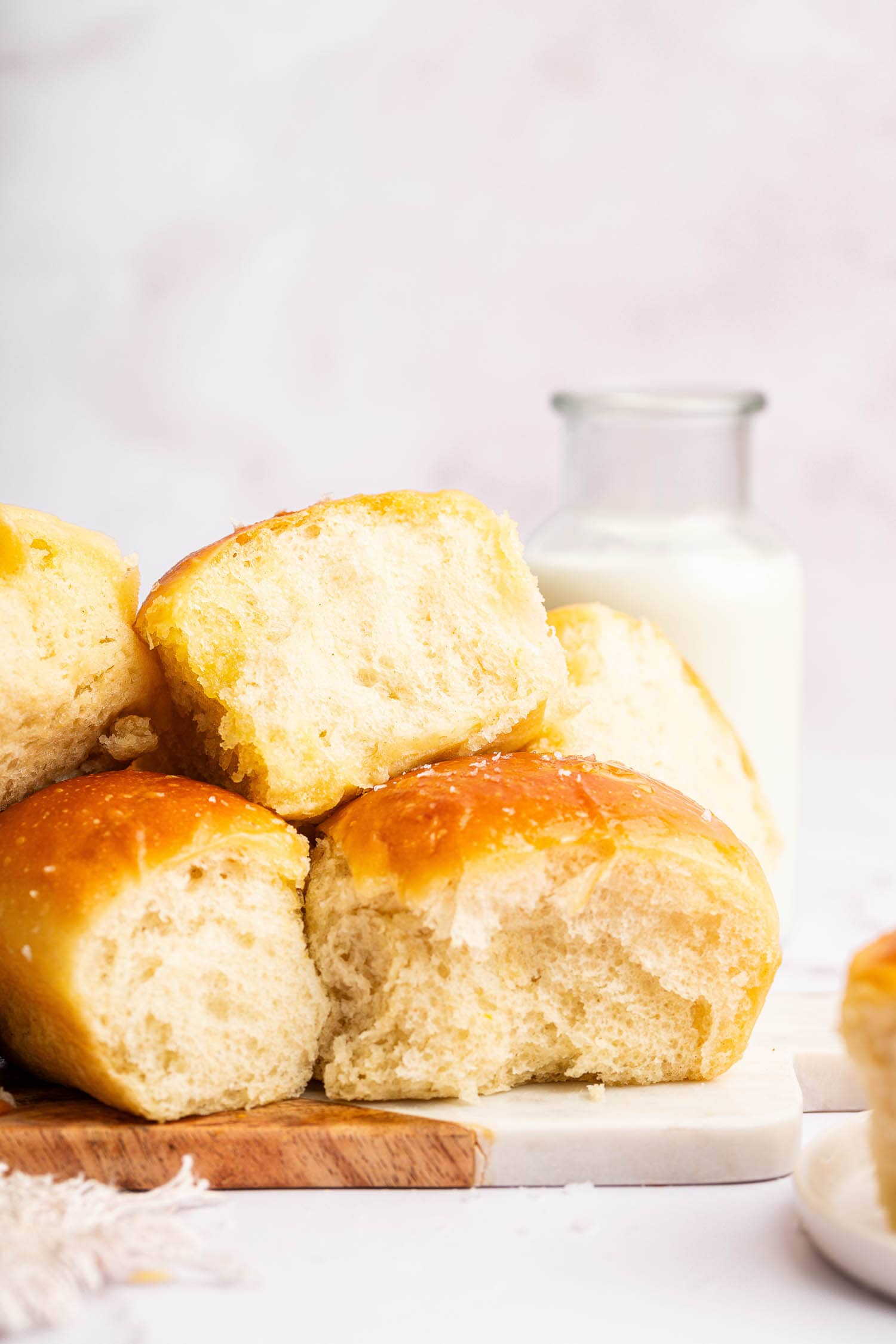
Soft, pull-apart, and brushed with butter until the tops shine, these classic dinner rolls get their pillowy texture from an old baker’s trick: mashed potato in the dough. The potato keeps them soft for days, which makes them a smart make-ahead bread for Thanksgiving and holiday dinners.
If you’ve never baked with yeast, this is a good first recipe. The dough is forgiving, works with instant or active dry yeast, and comes together in a stand mixer or by hand. The shaped rolls bake together in one 9×13 pan, and I’ll show you exactly what the dough should look like before baking.
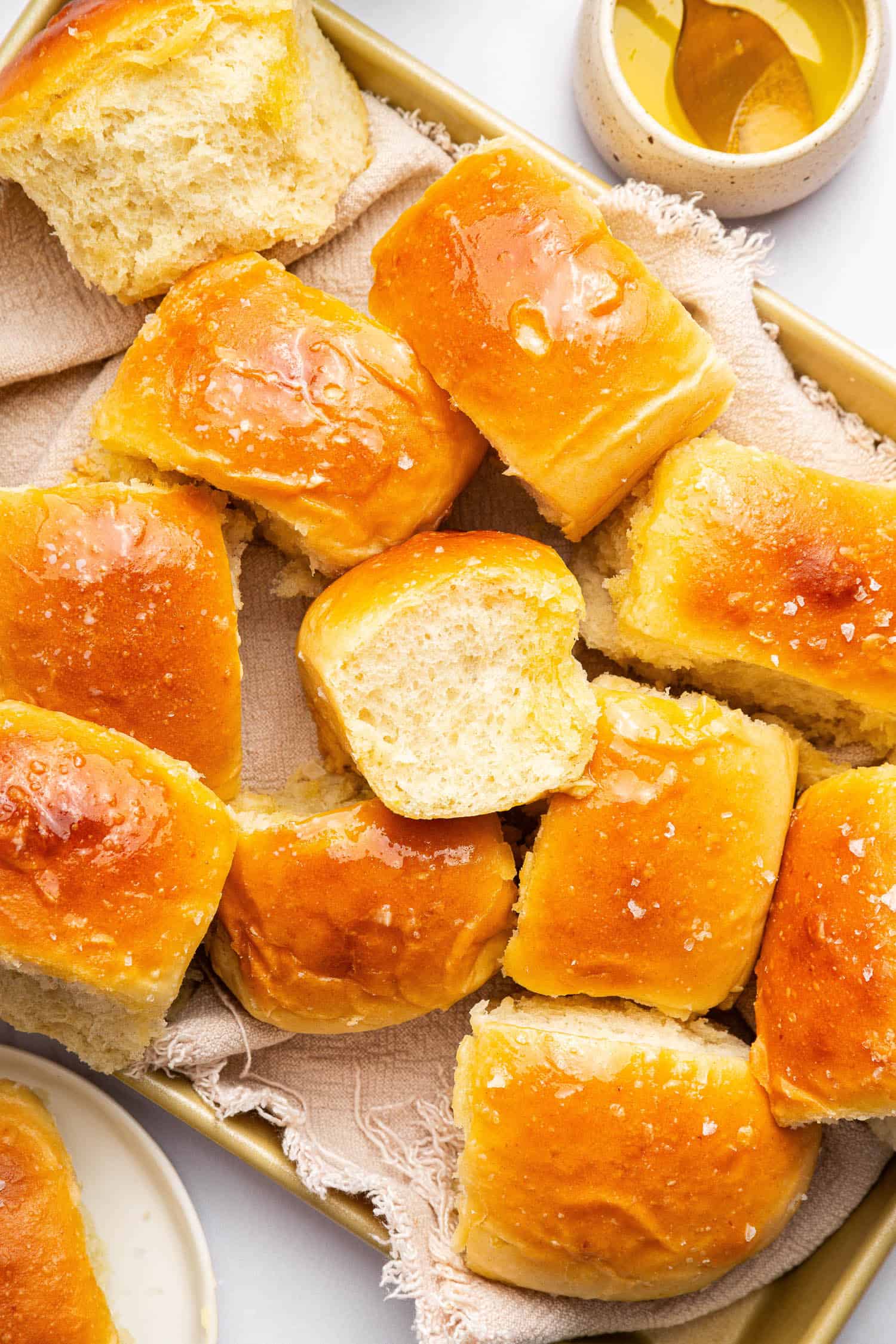
These rolls have become a holiday must on my table—right up there with favorite homemade cranberry sauce and Italian sausage stuffing. Whether you’re serving them with Thanksgiving dinner, alongside a hearty soup, or as slider buns for leftover turkey sandwiches, these buttery rolls steal the show every time.
The same soft, enriched dough idea makes pillowy Czech-style kolaches filled with fruit or sweet cheese.
Why You’ll Love These Rolls
- They stay soft for days. The mashed potatoes hold onto moisture, so you can bake them a day before the holiday, and they’ll still be soft on the table.
- They work with what you have. Instant or active dry yeast; fresh mashed potatoes or leftovers; a stand mixer or your hands.
- Two ways to get ahead. Refrigerate the shaped rolls overnight and bake them fresh, or bake now and freeze for up to 3 months.
- Soft but sturdy. They pull apart easily but hold up to gravy and next-day turkey sliders.
Ingredient Notes
Mashed potato: Russets are my pick. They’re starchy and mash up fluffy and smooth. Get them as smooth as you can with a ricer or masher. Leftover mashed potatoes work too. Save the potato cooking water and use it in the dough; the extra potato starch is a bonus.
Yeast (instant vs. active dry): Either one works, in the same amount.
- Instant yeast (also sold as RapidRise or bread machine yeast) goes straight into the flour.
- Active dry yeast needs to be dissolved in the warm water first. After 5–10 minutes it should look foamy. If it doesn’t, the yeast is dead, and you’ve only lost a little water instead of a whole batch of flour and butter.
Warm water, not hot: Aim for 105–115°F. Without a thermometer, it should feel comfortably warm on your wrist, like a baby’s bath. Hot water and hot potatoes can kill yeast; cool water just makes the rise slower.
Flour: All-purpose flour gives these rolls their tender, soft crumb. Weigh it if you can. If you’re using cups, spoon the flour into the cup and level it off. Scooping straight from the bag packs in extra flour, and that’s the most common reason a first batch comes out dense.
Butter: Softened means it dents easily when pressed but still holds its shape. It shouldn’t be shiny or melting. Leave it on the counter for about an hour.
Salt: Use table salt or fine sea salt. Kosher salt is coarser, so the same spoonful adds less salt.
Method Overview
Prepare your mashed potatoes by boiling the cut potato until fork-tender, then mashing and cooling. If you are using active dry yeast, activate the yeast with a little water from the recipe. Mix all the ingredients and knead until a soft dough forms, then let it rise until doubled. After shaping into balls, place them close together in your baking pan—this helps them rise tall and stay soft. Let them proof again until puffy, then bake until beautifully golden. Brush with melted butter while warm for that glossy, buttery finish. Full instructions are in the recipe card.
Tips & Techniques
- Resist adding extra flour. Potato dough feels stickier than plain bread dough. After kneading it should be soft and slightly tacky, like the back of a sticky note. Too much flour is what makes rolls dense.
- Find a warm spot. Yeast likes about 75–80°F. Try your oven with just the light on, or the top of the refrigerator. In a cool kitchen the dough still rises, just more slowly.
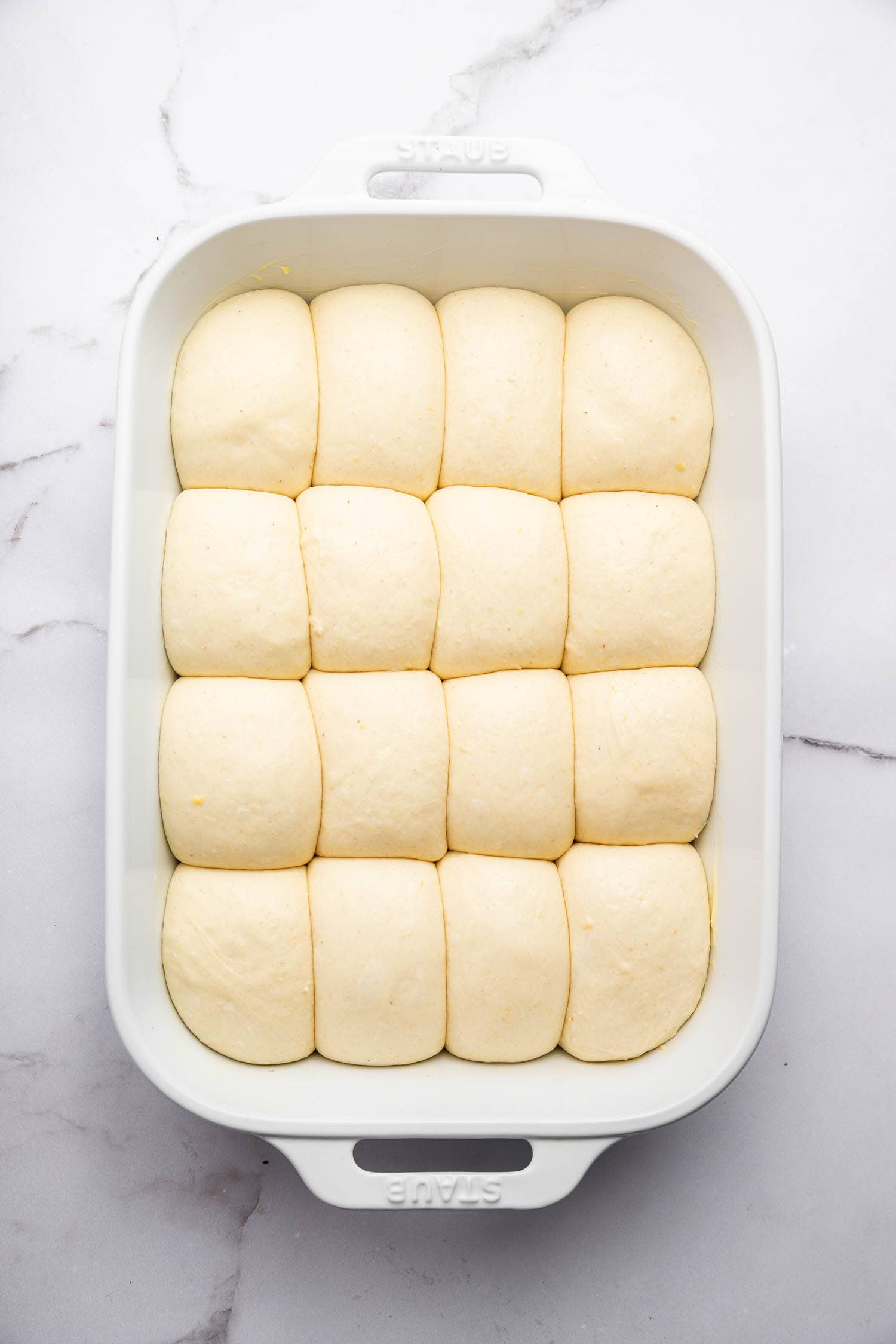
- Watch the dough, not the clock. Rise times in the recipe are a guide. The poke test is the real signal: a floured fingertip leaves a dent that fills back in slowly. For the shaped rolls, the poke test is the real signal: a floured fingertip leaves a dent that fills back in slowly.
- If the shaped dough over-rises. the rolls look very puffy, and a poke leaves a dent that doesn’t fill back in at all. Bake them right away. They’ll still taste good, just a little flatter.
- Shape tight balls. Pull the edges of each piece underneath and pinch them together, then roll it seam-side down under a cupped hand on an unfloured counter. The light grip of the counter tightens the top, so the rolls bake up smooth and round.
- Crowd the pan. Rolls set close together rise up instead of out, and the sides stay soft where they touch.
- Brown too fast? Lay a sheet of foil loosely over the pan for the last few minutes, until the centers reach 190°F.
- Make ahead: cover the shaped rolls and refrigerate overnight. The next day, let them sit out 1–2 hours until puffy before baking. Cold dough needs time to wake up.
- Use the same dough for something sweet. The same soft, enriched dough makes pillowy Czech-style kolaches with fruit or sweet cheese.
♥️ Loved this recipe? I’d be thrilled if you’d rate it ⭐️ and share your experience in the comments below! Your ratings and comments help other readers discover this recipe and keep this blog going. Did you add any special tweaks? Our community of home cooks would love to hear about it! ♥️
📖 Recipe

Old-Fashioned Potato Dinner Rolls
Click the heart icon ♡ above to save a recipe. To find your saved recipes later, click the heart icon on the right side of the screen near the search icon and select My Favorites.
Equipment
- Standing mixer optional (may also hand knead)
Ingredients
For the Mashed Potato
- 1 medium russet potato peel and cut into cubes
For the Dough
- 4 1/4 cup (530 g) all-purpose flour
- 2.5 teaspoons (7 g) dry yeast
- 1/3 cup (67 g) sugar
- 2 teaspoons (12 g) salt
- 6 tablespoons (84 g) unsalted butter softened
- 1 cup (270 9) mashed potatoes
- 3/4 cup (177 g) warm water (105–115°F)
To Brush Tops
- 2 tablespoons (28 g) butter melted
Instructions
Make the Mashed Potato
- Boil the potato chunks in unsalted water until a fork slides in easily, about 15 minutes. Scoop out 1 cup of the cooking water and set it aside, then drain the potato. Mash or rice it until completely smooth with no lumps. Measure 1 cup, lightly packed. Let the potato and the reserved water cool until they feel warm but not hot on your wrist (105–115°F). Hot potato will kill the yeast.
Start the Yeast
- Active dry: stir the yeast and a pinch of the sugar into the warm water. Let it sit 5–10 minutes, until foamy. If it doesn’t foam, the yeast is dead, so start over with fresh yeast. Instant: skip this step and whisk the yeast into the flour.
Make the Dough
- In a large bowl or stand mixer, combine the flour, sugar, salt, butter, mashed potato, and water (with the yeast, if you’re using active dry). Mix on low with the dough hook until no dry flour remains.
- Knead 6–8 minutes on medium-low in the mixer, or about 10 minutes by hand. The dough is ready when it’s smooth, soft, and slightly tacky, and pulls away from the sides of the bowl. Potato dough feels stickier than plain bread dough, so don’t add extra flour unless it sticks to your hands like paste. If you do, add 1 tablespoon at a time.
Bulk Rise and Shape
- Put the dough in a greased bowl, cover it, and let it rise in a warm spot until doubled, about 60–90 minutes. To check, press a floured finger about 1/2 inch into the dough. If the dent stays, it’s ready. If it springs right back, give it more time.
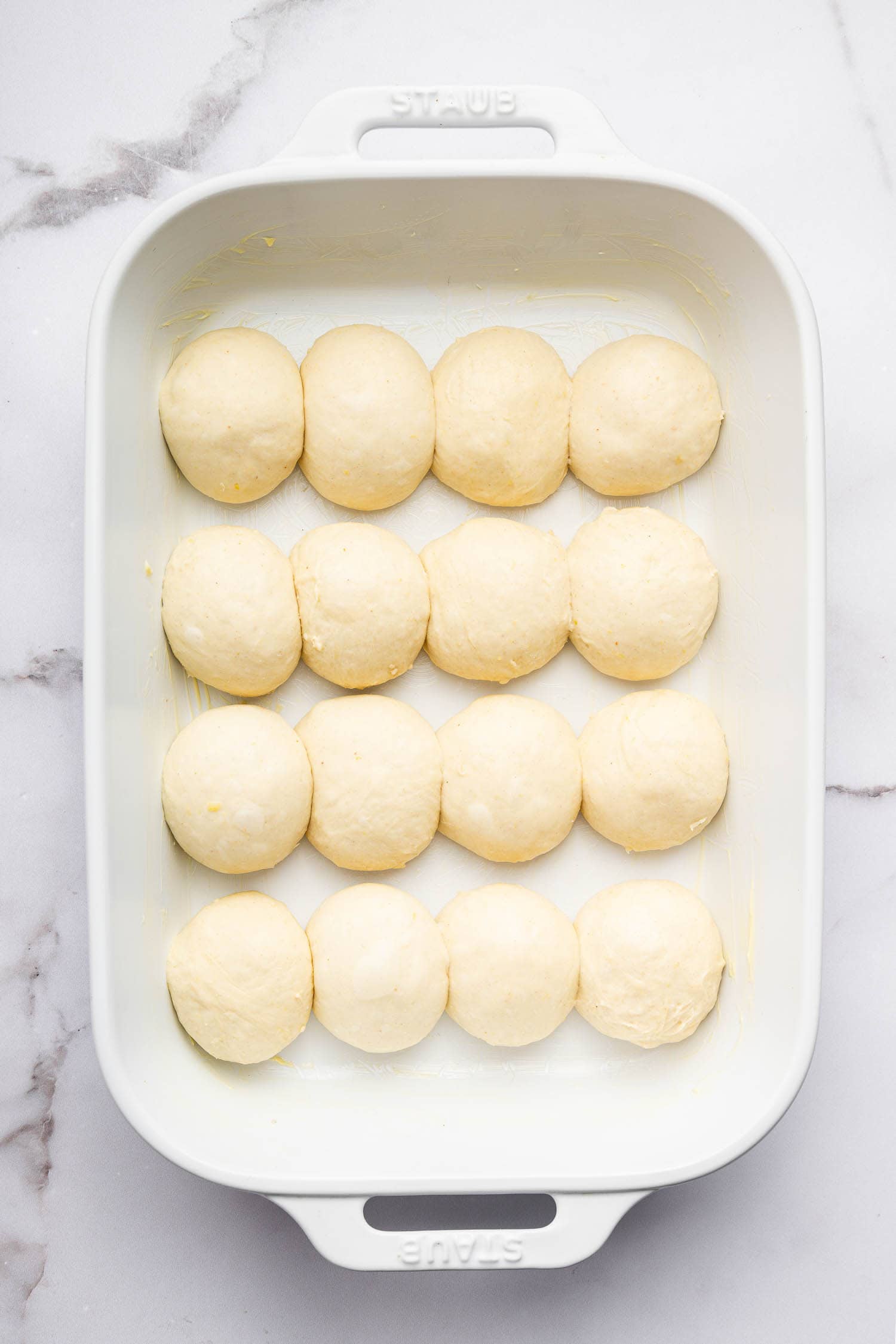
- Gently press out the air and divide the dough into 24 pieces, about 46 g each. Roll each piece on an unfloured counter under a cupped hand, or tuck the edges underneath, until you have a smooth, tight ball.
Final Rise
- Second rise. Place the balls in a greased 9×13 pan in 4 rows of 6. Cover with lightly greased plastic wrap. Let them rise until they’re puffy, about 1 1/2 times their original size, and touching each other, about 45–75 minutes. A gentle poke should spring back slowly and leave a slight dent. Preheat the oven to 350°F about 30 minutes before baking.
Bake and Finish
- Bake for 20–25 minutes, until the rolls are deep golden brown and the center reads 190°F on an instant-read thermometer.
- Butter. Brush the rolls with melted butter as soon as they come out of the oven. Let them cool in the pan for 10 minutes
Notes
-
- Leftover mashed potatoes: Bring them to room temperature first, and use 3/4 cup warm tap water.
- Make ahead: Once the rolls are in the pan, cover and refrigerate up to overnight. Take the rolls out 1–2 hours before baking and let them sit until puffy. Cold dough rises slowly.
- Freeze: freeze baked rolls up to 3 months. Reheat wrapped in foil at 300°F for 10–12 minutes.
Nutrition
🍞 Old-Fashioned Yeast Rolls FAQs
Can I make these rolls ahead of time?
Yes! Shape the rolls, cover, and refrigerate overnight. Bring to room temperature before baking. They bake up just as soft and fresh as the same-day version.
Can I use leftover mashed potatoes?
You can—just make sure they aren’t heavily seasoned. A few traces of butter or salt won’t hurt, but skip any with cream, garlic, or herbs.
What kind of yeast should I use?
Both instant and active dry yeast work well. Instant yeast can go straight into the flour; active dry should be dissolved in warm water first.
Can I freeze the baked rolls?
Yes. Cool completely, wrap tightly, and freeze for up to 3 months. Reheat in a 300°F oven (wrapped in foil) for 10 to 12 minutes for that just-baked taste.
How do I store leftover rolls?
Keep in an airtight container at room temperature for up to 3 days. The mashed potato helps them stay soft without drying out.
I love to cook when the cold weather hits! I love good simple Italian dishes!