
Classic Italian Pizzelle (Stays Crispy!)
This post may contain affiliate links. For more information, please see our disclosure policy.
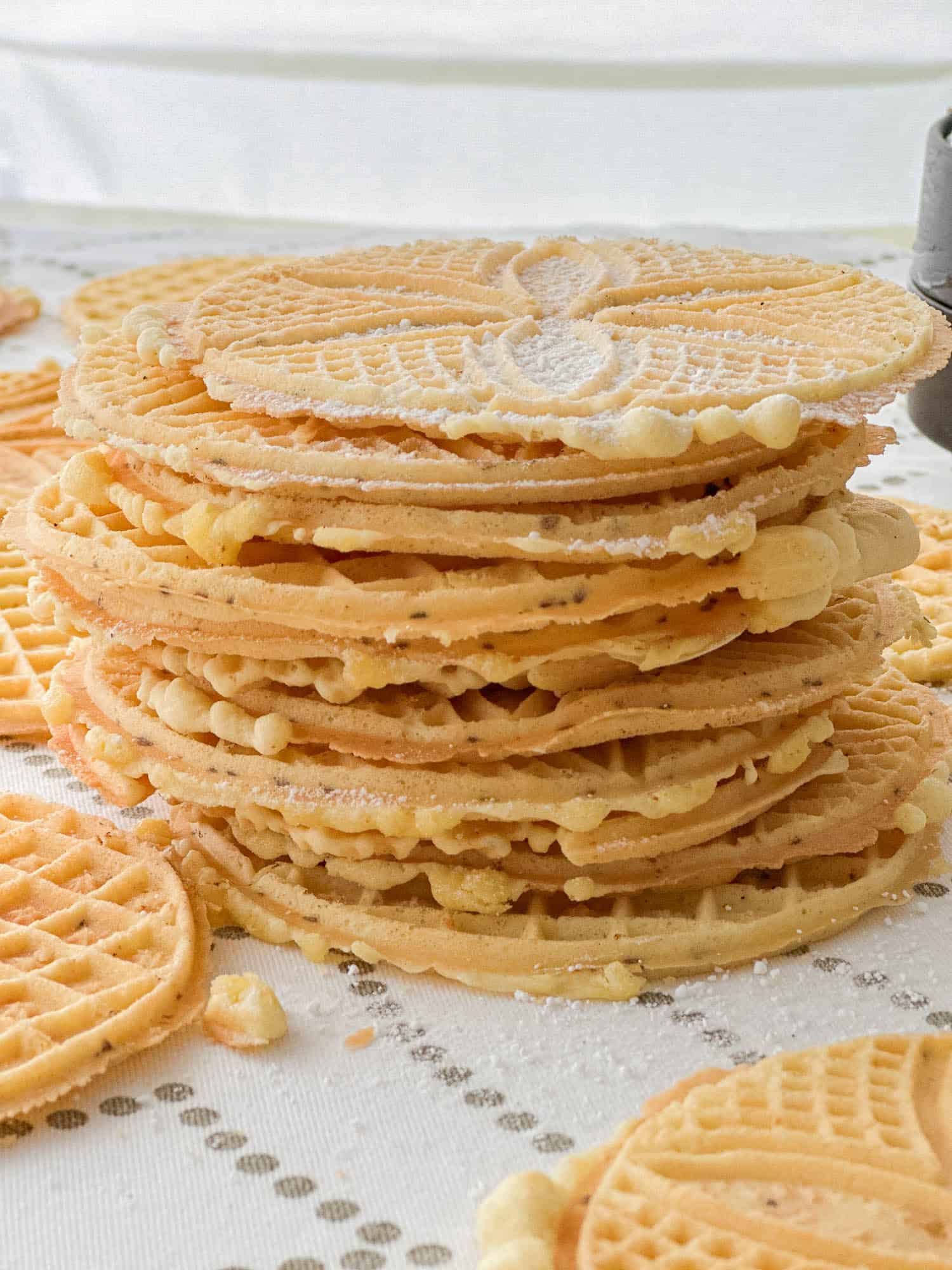
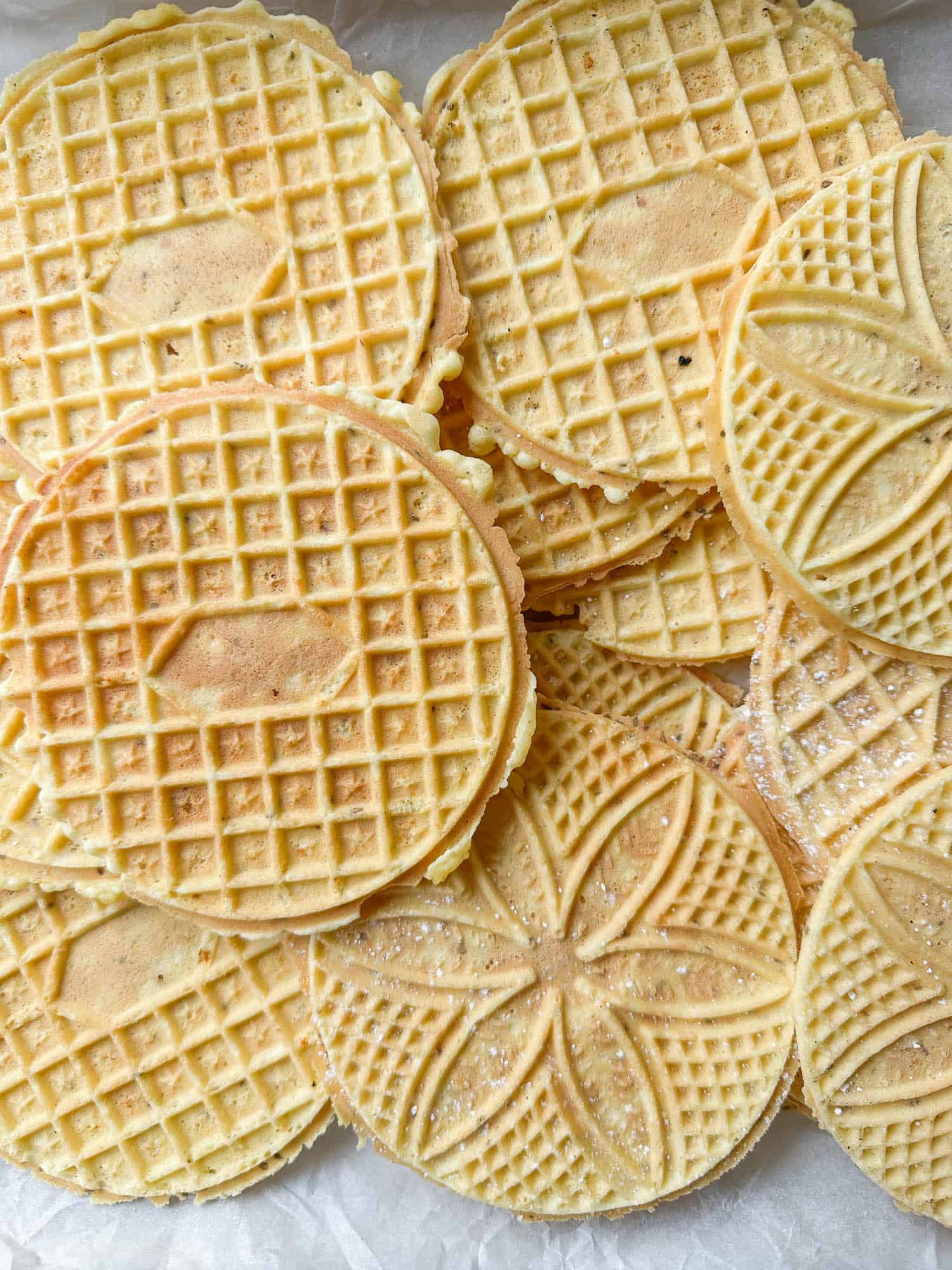
Thin, lacy pizzelle that snap when you bite them, scented with anise and crushed anise seeds, the way the best bakeries in our Philly neighborhood made them. This recipe comes straight from my mom and her sister. My aunt made them by the case, and my mom always had a few tins on hand.
When we made them, my mother would spread a clean tablecloth over the whole dining room table and cover it, edge to edge, with cooling pizzelle. We were supposed to leave them alone until they were cold. Nobody did. A warm one straight off the iron is its own thing.
I love this recipe for two reasons. The oil, the old-school method, is what keeps these crisp for weeks instead of days. And a half teaspoon of anise extract plus a couple of teaspoons of lightly crushed anise seeds hits it just right: that bakery aroma with little warm pops of flavor, never overpowering. Most people stop at the extract. The seeds are what make them taste like the bakery ones.
They’re a staple on our Christmas tray next to Italian wedding cookies and old-world Italian nut biscotti.
Why You’ll Love These Pizzelles
- They stay crisp for weeks. Oil instead of butter is the old-school trick, which is why you can make them by the case like my aunt did.
- Real bakery flavor. Anise extract plus lightly crushed anise seeds gives you the aroma and little pops of flavor.
- One-bowl batter. It comes together in minutes. The iron does the rest.
- Made for gifting. They’re thin, sturdy and stackable, so they travel well in a tin or a box.
- Perfect with coffee. Crisp enough to dunk without falling apart.
/
Choosing a Pizzelle Iron
I make mine on a Palmer, but here’s what matters in any iron:
How thin it presses. Thinner plates make crisper pizzelle. If thin and snappy is what you’re after, look for an iron sold as “thin” or “extra thin.”
What it’s made of. Heavy cast aluminum heats evenly and lasts for decades. Lighter, cheaper irons work, but they’re more likely to have hot spots.
Coated or uncoated. Non-stick releases easily and cleans up fast, but coatings wear over time. An uncoated cast aluminum iron can outlast you, which is why fifty-year-old Vitantonios are still in use.
How often you’ll use it. If you make pizzelle once a year, a $40 CucinaPro or Cuisinart is fine. If you make ten dozen every December, buy a good one once.
Ingredient Notes
- All-Purpose Flour: Standard flour gives pizzelle their delicate crispness — no need for specialty flours.
- Oil: The traditional fat, and why these stay crisp. Canola, vegetable, or light olive oil all work.
- Eggs: Provide structure and richness. Bring to room temperature before mixing.
- Sugar: Regular granulated sugar gives these cookies balanced sweetness and that light golden color.
- Anise Extract: The traditional flavor for pizzelle — use 0.5 teaspoon for a classic taste, or swap for vanilla (or both), or use lemon extract/lemon zest, if you prefer. I also absolutely love to mix in anise seeds (pounded)! If you love anise flavor, the same flavor can be used in my Italian Wedding Cookies.
- Baking Powder: Helps the cookies puff slightly and release easily from the iron.
Why Oil, Not Butter
Pizzelles come from Abruzzo, where they’re traditionally made with oil — olive or a light seed oil. Butter is the American addition, and it costs you the two things that make a pizzelle a pizzelle.
Butter is about 16% water, and a pizzelle has 35 seconds to dry out and turn glassy. Its milk solids scorch, too, browning the outside before the middle finishes — so you pull them early and they’re soft by evening. Oil has neither problem.
It matters most in December. Oil pizzelle stay crisp for weeks. Butter ones soften in days.
Does butter taste better on its own? Sure. But you’d never taste it under a half teaspoon of anise. The fat’s job here is texture, and oil does it better.
Flavor Ideas
You can keep these classic with anise and vanilla, or change things up with almond extract, lemon or orange zest, cocoa powder, or a little instant espresso. For a fun twist, fold in a few rainbow sprinkles right before cooking each pizzelle to make “birthday pizzelle.” You should expect your iron to get a little messy. You can also tint the batter with food coloring for Christmas (red or green), Easter (pastels), or any holiday theme.
Anise Pizzelles: Seeds, Extract, or Oil?
When it comes to flavoring pizzelles, you can use anise seeds, anise extract, or anise oil—each gives a slightly different result. Most Italian American families use anise extract.
Anise seeds offer a mild, warm flavor with little crunchy pops, while anise extract delivers that classic sweet, aromatic pizzelle taste most of us grew up with. Anise oil is the most intense option: just a drop or two adds a deep, Italian-bakery-style punch.
If you want a well-rounded flavor, my favorite combination is a half teaspoon of extract plus 2 teaspoons of lightly crushed anise seeds (per batch of cookies). It gives you that nostalgic pizzelle aroma, with just enough texture to enhance the cookie without overpowering it. I found anise seeds at my local farmers’ market.
Method Overview
To make pizzelles, whisk together eggs, sugar, and oil, then stir in anise extract (or whatever flavorings you’ll be using). Add flour and baking powder and mix until a thick, smooth batter forms. Preheat your pizzelle iron for at least 15 minutes. Drop about 1.5 tablespoons of batter in the center of each pattern, close the lid, and cook for 30–40 seconds or until golden. Let them cool flat on a tablecloth or cookie rack for a crisp texture, or roll them while they are still warm to shape cones or cannoli shells.
Fun Ways to Use Pizzelles
I love to serve these plain, but there are so many ways to use them. Here are some ideas:
- Mini Cannoli Shells: Quickly roll hot pizzelle around a metal cannoli form to cool. Fill with ricotta cream once crisp.
- Ice Cream Tacos: While warm, drape pizzelle over a wooden spoon handle or the edge of a loaf pan to form a taco shape. Once cooled, fill with ice cream and drizzle with melted chocolate.
- Pizzelle Sandwich Cookies: Spread with Nutella, cannoli cream, pastry cream, or buttercream and sandwich two together.
- Chocolate-Dipped Pizzelle: Dip half of each cooled pizzelle into melted chocolate (milk, dark, or white). Add crushed pistachios, sprinkles, or toasted coconut.
- Rolled Cigars: Roll warm pizzelle into loose cigar tubes. Perfect for dipping into chocolate or espresso cream.
- Pizzelle Bowls: Press hot pizzelle over an inverted small bowl or ramekin to form edible dessert bowls. Fill with gelato, berries, or whipped cream.
- Crumbled as Topping: Crush pizzelle and use as a crunchy topping for tiramisu, ice cream, yogurt, or ricotta parfaits.
- Holiday Gift Boxes: Stack different flavored pizzelle (vanilla, anise, chocolate) and tie with twine for simple edible gifts.
Tips & Techniques
- Preheat at least 15 minutes. An under-heated iron is the number one reason pizzelle stick. Longer is better than shorter.
- Grease before the first batch. Some irons claim they don’t need it. I grease mine regardless — two seconds of insurance. After that, the batter’s own oil keeps the plates seasoned.
- The first one or two are testers. Every iron runs differently. Use them to dial in your batter amount and timing, then snack on them.
- Start with 1½ tablespoons of batter. Too much oozes out the sides, too little won’t reach the edges of the pattern.
- Close the iron completely and clip it shut. This is what gives you thin, crisp cookies instead of thick, puffy ones.
- Adjust the batter after your tester. Spreading too thin or looking see-through? Add flour a tablespoon at a time. Not reaching the edges, or heavy? Loosen with a splash of oil.
- Cool flat, in a single layer. My mom spread a clean tablecloth across the table and filled it. Stacking traps steam, and steam is what makes them soft.
- If they soften later, 3–5 minutes in a 300°F oven brings the snap back.
♥️ Loved this recipe? I’d be thrilled if you’d rate it ⭐️ and share your experience in the comments below! Your ratings and comments help other readers discover this recipe and keep this blog going. Did you add any special tweaks? Our community of home cooks would love to hear about it! ♥️
📖 Recipe
Classic Italian Pizzelles (Stays Crispy!)
Click the heart icon ♡ above to save a recipe. To find your saved recipes later, click the heart icon on the right side of the screen near the search icon and select My Favorites.
Equipment
- pizzelle iron (electric) I use a Palmer iron (the 1000); I've also heard Vitantonio pizzelle irons are excellent irons; some people also like Cucina Pro
Ingredients
For the Batter
- 3 large eggs
- 1/2 cup oil (neutral) vegetable, canola, or light olive
- 3/4 cup sugar up to 1 cup
Flavoring (see Notes for other Flavor Ideas)
- 0.5 teaspoon anise extract may add 2 teaspoon lightly crushed anise seeds
- 1 teaspoon vanilla
- 1 tablespoon Sambuca optional
Dry Ingredients
- 1 1/3 cups flour up to 2 cups for thicker/heavier pizzelle ; see Notes
- 1/2 teaspoon baking powder
- 1/4 teaspoon salt
Instructions
- It may be helpful to skim the Notes Section tips before starting.
- Mix the wet ingredients: In a large bowl, whisk the eggs, oil, and sugar until well combined and slightly thickened. Stir in your flavorings (eg, vanilla, anise extract, and Sambuca).
- Add the dry ingredients: In a separate bowl, whisk together the flour, baking powder, and salt. Add the dry mixture to the wet mixture in two additions, stirring just until a smooth, thick batter forms.
- Heat the pizzelle iron: Preheat your pizzelle maker according to the manufacturer’s instructions. I recommend heating no less than 15 minutes!
- Cook the pizzelle: Spray the iron lightly with cooking spray or use a little shortening (for the first batch). Then, drop 1.5 tablespoons of batter onto each circle of the hot iron (the exact amount depends on your machine). Close and cook until lightly golden, usually 30–40 seconds.
- Cool: Transfer pizzelle to a tablecloth-lined table and cool in one layer. They will crisp as they cool.
- Store: Once completely cool, store in an airtight container for up to 1 week or freeze for longer storage.
Notes
Before you start
- Preheat the iron at least 15 minutes. An under-heated iron is the #1 reason pizzelle stick.
- Grease before the first batch. Some irons claim they don’t need it. I grease mine regardless — two seconds of insurance. After that, the batter’s own oil keeps the plates seasoned.
- The first 1–2 are testers. Every iron runs differently. Use them to dial in timing and batter amount.
Getting them right
- Start with 1½ tablespoons of batter. Too much oozes out; too little won’t fill the pattern.
- Close the iron completely and clip it shut. This is what makes them thin and crisp instead of thick and puffy.
- Too thin or see-through? Add flour a tablespoon at a time. Too heavy, or not reaching the edges? Loosen with a splash of oil.
- If they start sticking mid-batch, give the iron a minute to reheat and lift edges with a silicone spatula or wooden skewer. A damp paper towel cleans the grates.
Cooling and storage
- Cool flat in a single layer — my mom used a clean tablecloth across the table. Stacking traps steam, and steam makes them soft.
- Store airtight only once completely cool, with a small piece of dry paper towel to absorb moisture. Keeps 1–2 weeks, or freeze.
- If they soften, 3–5 minutes in a 300°F oven brings the snap back.
- Batter can be made ahead: refrigerate 1–2 hours, then bring to room temperature.
Why Pizzelle Go Wrong
- Soft instead of crisp — almost always cooling. They crisp as they cool, but only in a single layer. Stacked warm cookies steam each other.
- Sticking — the iron wasn’t hot enough. Fifteen minutes minimum, and grease it.
- Thick and puffy — the iron wasn’t clipped shut, or there’s too much flour in the batter.
Pizzelle Flavors
🇮🇹 Traditional Italian Flavors
- Anise (oil, extract, or seeds)
- Vanilla
- Lemon (zest or extract)
- Almond
- Orange
- Amaretto-inspired (almond + a hint of citrus)
✨ Modern / Fun
- Chocolate (cocoa powder)
- Cinnamon
- Espresso
- Hazelnut (crushed finely)
- Nutella Swirl (mix 1 tablespoon of softened nutella into 1 cup of batter)
- Cocoa + Orange (orange zest or extract)
- Mint Chocolate (cocoa powder and a few drops of peppermint oil)
🎄 Holiday & Seasonal
-
- Peppermint (use drops very sparingly)
- Pumpkin Spice
- Gingerbread Spice
- Anise + Orange Zest (Christmas classic)
- Chocolate-Dipped with Sprinkles (may roll and dip)
- Almond + Cranberry (almond extract and crushed dried cranberries)
Nutrition
🍪 Italian Pizzelles FAQs
The iron may not be fully preheated, may not have been clipped shut, or may need seasoning (depending on the model). Batter that’s too moist can also cause sticking.
The iron wasn’t clipped shut, wasn’t hot enough, or the batter has too much flour. Thick batter = thick pizzelle.
You can, but they won’t keep. Butter’s water content softens the cookie within a few days, and the milk solids brown before the center dries. Oil is what’s traditional in Abruzzo and it’s what makes these snap.
Cool completely, then store airtight and away from humidity. If they soften, warm in a low oven for a few minutes.
Usually the iron isn’t fully preheated, or the lid was opened too soon. Allow full heat-up time and avoid peeking.
Most irons need 1½–2 tablespoons. Too much batter will leak out the sides; too little won’t fill the pattern.
Yes. Refrigerate for 1–2 hours, then bring to room temperature before cooking.
Typically 1–2 weeks when stored airtight. They keep best in cool, dry weather.
Yes. Layer with parchment and freeze. Thaw uncovered; re-crisp in a warm oven if needed.
Absolutely. Vanilla, lemon, almond, chocolate, espresso, maple, and seasonal spices all work beautifully.
Yes, and it’s what many families in Abruzzo use. Light or refined olive oil is a direct swap. A mild extra virgin works too and adds a subtle fruitiness that’s lovely with lemon. Skip anything strongly peppery — it’ll overpower the anise.
They were either undercooked, the iron wasn’t fully heated, or they cooled on a plate instead of a rack/tablecloth. Batter that’s too wet can also cause softness. Always cool uncovered.
I have been making these cookies for years and decided to try this recipe. Absolutely great! Thin, crispy and so delicious… thank you for sharing. My family was original from South Philadelphia and I have many memories of visiting and cooking with my grandparents, one from Naples and one from Abruzzi … wonderful pizza, desserts and family time.
Thank you so much! I love hearing that! Those South Philly memories, especially with roots in Naples and Abruzzo, are so special. I’m really glad the cookies hit the mark for you – they are a favorite of mine too ❤️
Best recipe I have used. Came out nice and crispy. Thank you.
These never fail me either – always crispy – so glad it worked for you too!