
Ricotta Gnudi (Naked Ravioli)
This post may contain affiliate links. For more information, please see our disclosure policy.
If you love the filling of ricotta ravioli, this is the part you actually want to eat.
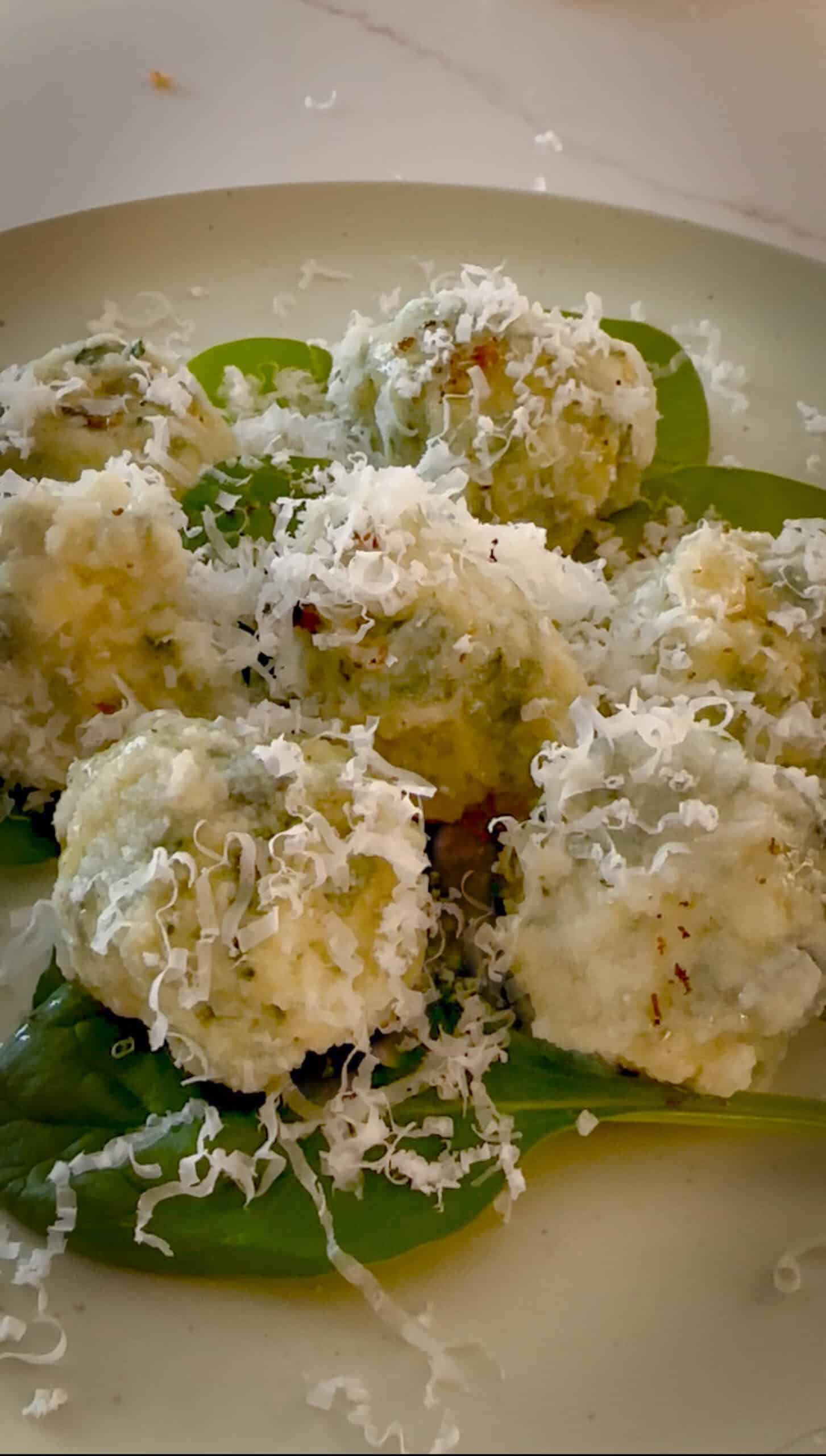
Gnudi—often called “naked ravioli”—are soft dumplings made from ricotta, spinach, and Parmesan, gently simmered until just set. No pasta wrapper, just the best part.
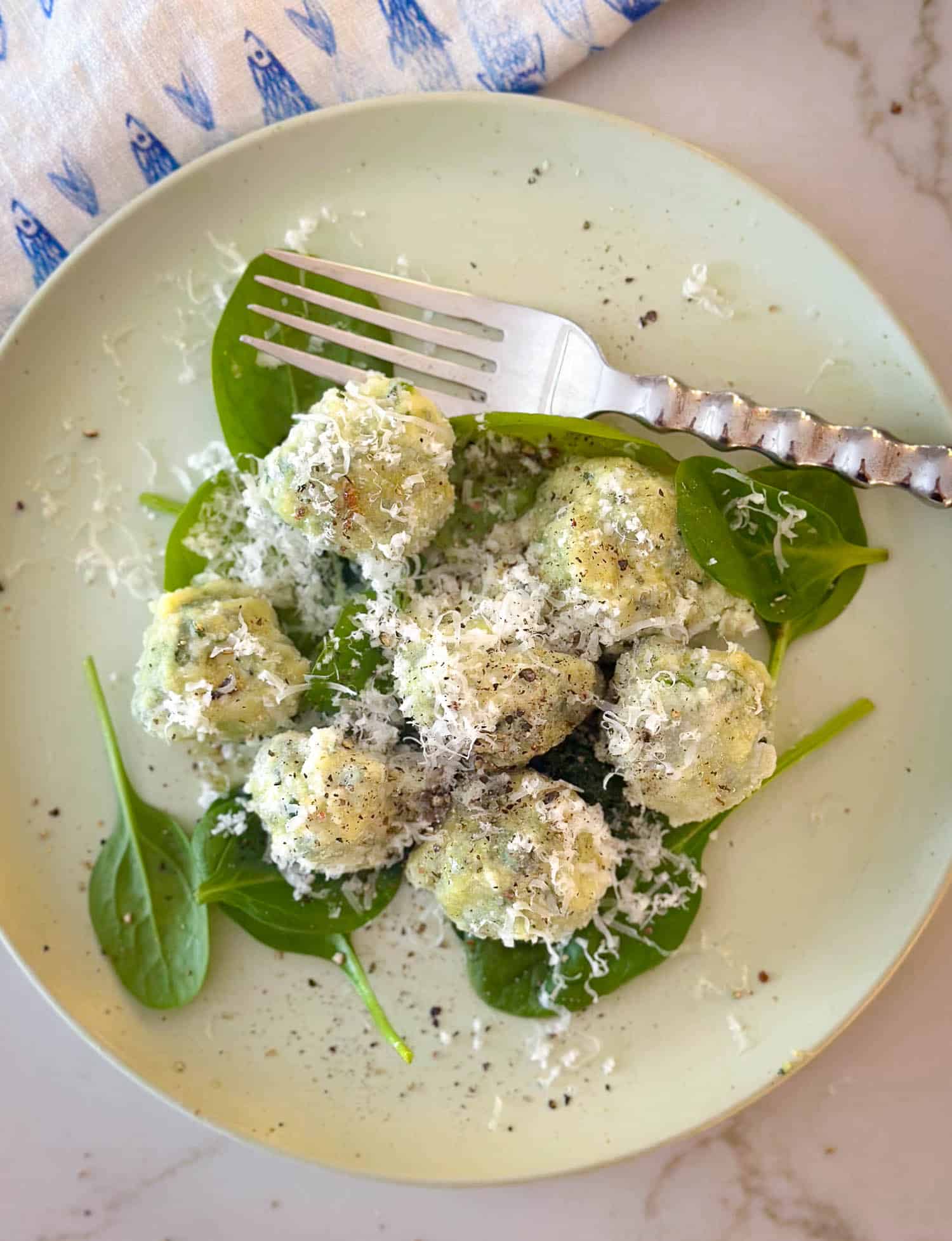
They’re incredibly light and tender, with a delicate bite—creamy on the inside, barely held together on the outside, and rich without feeling heavy. Tossed in warm sage butter, they soak up the sauce and melt in your mouth like little ricotta clouds.
If you enjoy soft, ricotta-based dumplings, you might also like my ricotta gnocchi—a different texture, but just as simple to make. You can also serve this in a simple marinara sauce instead of the sage butter sauce.
Why Make These?
- First, they’re much easier than making ravioli. You get the same delicious ricotta filling without rolling pasta dough or shaping individual pieces.
- They’re also incredibly light. With only a small amount of flour, the dumplings stay soft and tender.
- And finally, they’re a great way to showcase good ricotta. When a recipe uses only a handful of ingredients, the quality of each one really matters.
Ingredient Notes
- Ricotta – Use whole milk ricotta if possible. If the ricotta seems watery, drain it in a sieve or cheesecloth for about 30 minutes before using.
- Spinach – Fresh spinach works best. After cooking, squeeze it extremely dry so the dumplings hold together.
- Eggs – Eggs provide structure and help bind the mixture.
- Parmesan – Freshly grated Parmesan adds saltiness and depth of flavor.
- Flour – Only a small amount is needed. Too much flour will make the dumplings dense.
- Nutmeg – A small pinch complements the ricotta and spinach.
- Butter and sage – A classic Italian pairing that keeps the dish simple and flavorful.
Overview of the Method
Making this ricotta gnudi recipe is surprisingly simple.
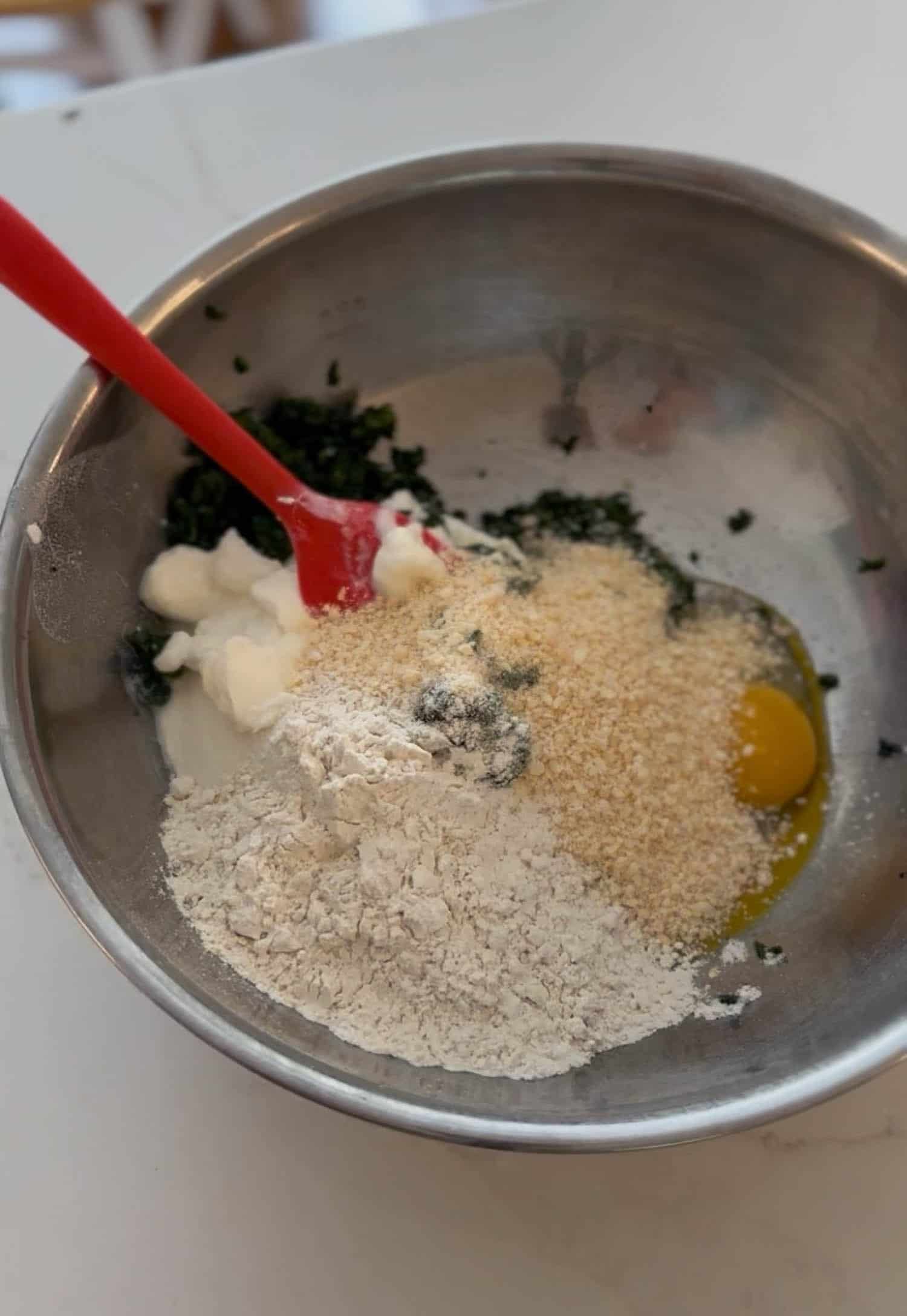
First, the spinach is cooked and squeezed dry before being finely chopped. It’s then mixed with ricotta (well drained), egg, Parmesan, flour, and seasoning to create a soft dough.
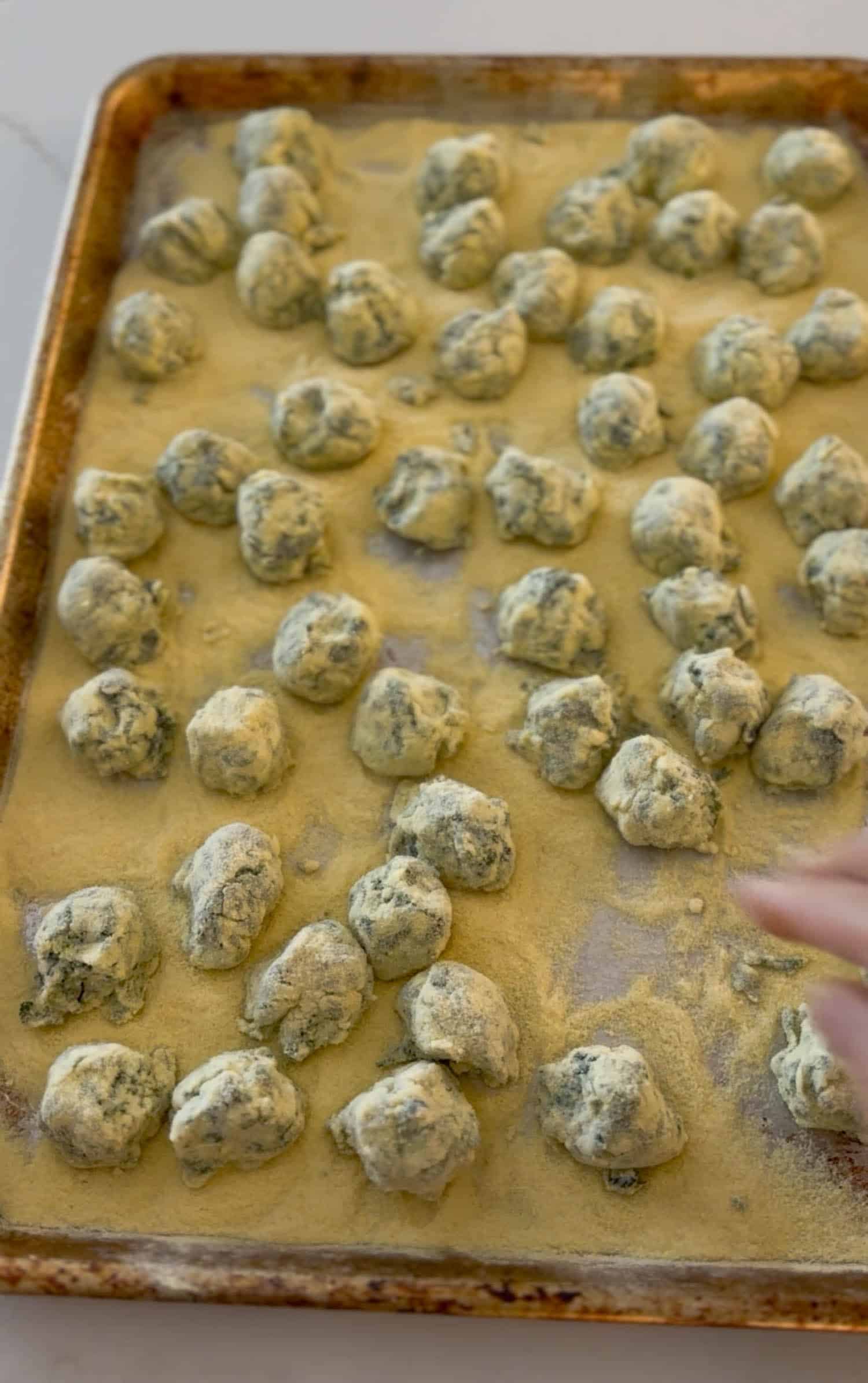
Small dumplings are shaped and lightly coated in semolina. After resting in the refrigerator, they’re gently simmered in salted water until they float.
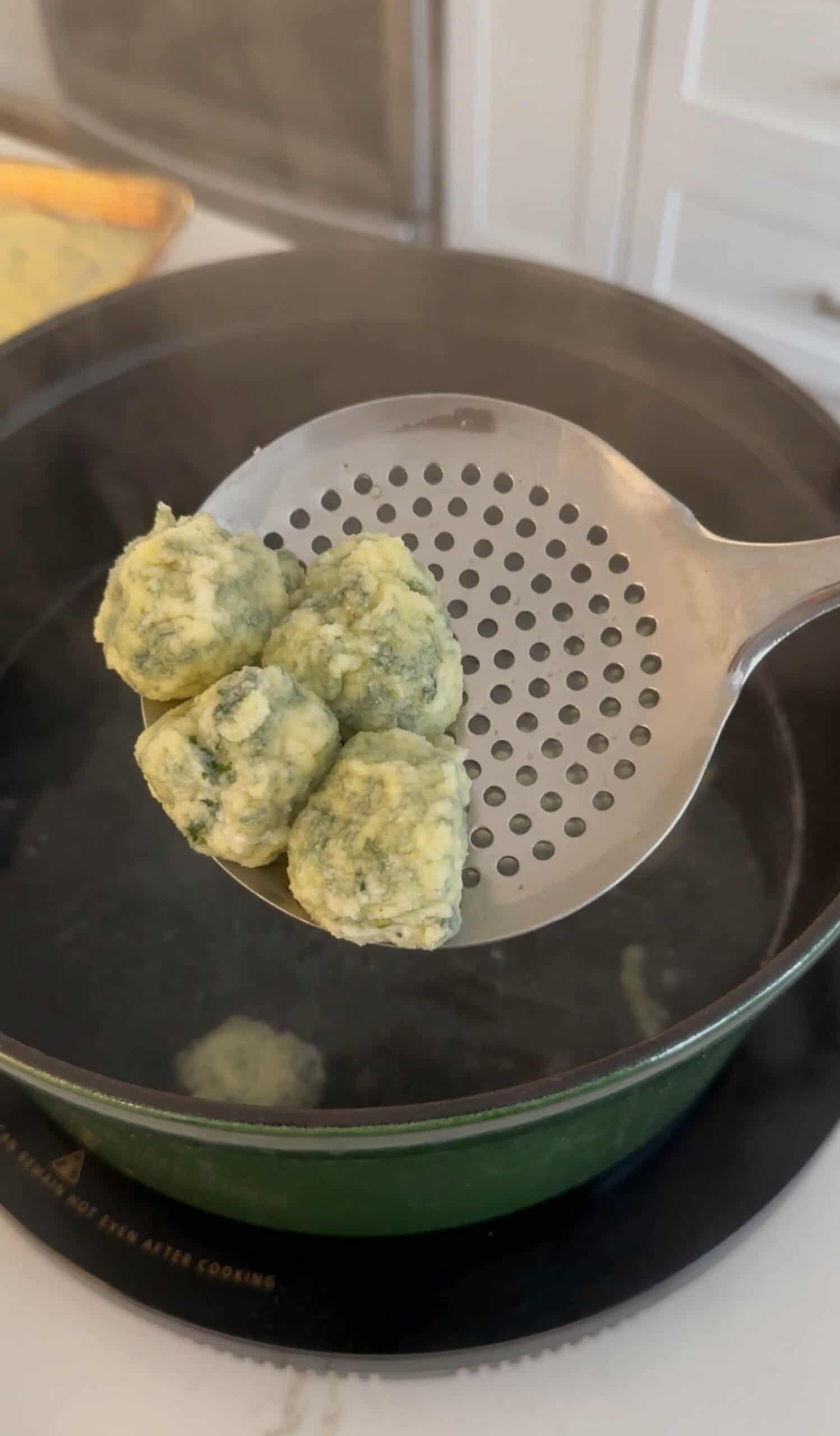
Finally, the gnudi are tossed with butter and sage and served with grated Parmesan. Some people brown them in butter but I don’t think it’s necessary.
Variations
Ricotta-Only Gnudi (No Spinach)
- Adjustments: Add 1–2 tablespoons flour or semolina (as needed)
- Increase Parmesan slightly; Chill 3–4 hours or overnight; Handle gently when simmering
Mascarpone-Ricotta Gnudi
- Adjustments: Add 1–2 tablespoons flour/semolina; Chill 4 hours or overnight
Beet Powder Gnudi (No Spinach)
- Adjustments: Add 1–2 teaspoons beet powder; 1–2 tablespoons flour/semolina if needed
The dough should be soft but hold its shape when rolled—if it feels sticky or slumps, add another tablespoon of flour or semolina.
Tips for Success
- Drain ricotta well to remove excess moisture.
- Squeeze spinach thoroughly after cooking.
- Keep the dough soft and avoid adding too much flour.
- Let the dumplings rest in the refrigerator before cooking.
- Cook gnudi in gently simmering water rather than a rolling boil.
- Use a slotted spoon to transfer them to the sauce.
♥️ Loved this recipe? I’d be thrilled if you’d rate it ⭐️ and share your experience in the comments below! Your ratings and comments help other readers discover this recipe and keep this blog going. Did you add any special tweaks? Our community of home cooks would love to hear about it! ♥️
📖 Recipe
Ricotta Gnudi (Naked Ravioli)
Click the heart icon ♡ above to save a recipe. To find your saved recipes later, click the heart icon on the right side of the screen near the search icon and select My Favorites.
Ingredients
For the Gnudi
- 12 oz fresh spinach
- 15 oz whole milk ricotta well drained (1 container)
- 1 large egg plus 1 egg yolk
- ½ cup grated Parmesan
- ½ cup all-purpose flour plus more for shaping
- Pinch nutmeg
- Salt and pepper to taste
For Shaping and Staging the Gnudi
- 1 cup semolina or all purpose flour (see Notes) or more as needed
For Serving
- 4 tablespoons butter
- 8 –10 fresh sage leaves
- Extra grated Parmesan
Instructions
To Make the Gnudi Dough
- Bring a pot of water to a boil and add the spinach. Cook just until wilted, about 1 minute. Drain and squeeze the spinach extremely dry using a clean towel or cheesecloth. Finely chop.
- In a large bowl, combine the dried/drained ricotta, chopped spinach, egg, egg yolk, Parmesan, flour, nutmeg, salt, and pepper. Mix gently until a soft dough forms.
- Lightly flour your hands and shape the mixture into small dumplings about the size of a walnut. Place them on a tray lightly coated with semolina.
- Refrigerate the dumplings for at least 2 hours or up to overnight if making ahead.
To Cook the Gnudi
- Bring a large pot of salted water to a gentle simmer (not a rolling boil).
- Carefully add the gnudi in batches to a pot of gently simmering salted water (not a rolling boil), making sure not to overcrowd the pot—too many at once can lower the water temperature and cause them to fall apart. Cook until they float, about 2–3 minutes.
To Make the Sauce
- Meanwhile melt the butter in a skillet over medium heat and add the sage leaves. Cook until the butter becomes fragrant and lightly golden.
- Using a slotted spoon, transfer the gnudi directly from the water to the skillet. Toss gently to coat in the butter and sage.
- Serve immediately with grated Parmesan.
Notes
- If the ricotta seems watery, drain it in a sieve for about 30 minutes before using.
- Squeeze the spinach extremely dry after cooking. Excess moisture is the most common reason gnudi fall apart.
- Chilling the shaped dumplings helps them hold together while remaining soft and delicate.
- Cook the gnudi in gently simmering water rather than boiling to prevent them from breaking.
- Frozen spinach can be used instead of fresh. Thaw a 10-oz package and squeeze very dry before using.