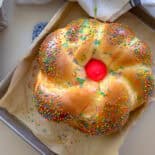
Italian Easter Bread
A soft, light, and tender Italian Easter bread inspired by traditional Italian-American recipes. This recipe makes two large, beautifully braided loaves that are perfect for Easter.
Servings: 32 servings
Calories: 48kcal
Ingredients
For the Dough
- 1 cup warm water or use half milk and half water
- 4 teaspoons instant yeast
- 2 large eggs
- 3/4 cup granulated sugar plus 2 tablespoons
- 1 small lemon or orange zest only
- 2 teaspoons vanilla extract
- 1/3 cup neutral oil such as vegetable or canola oil
- 4.5 cups all-purpose flour plus 1/2 cup more if needed to get a soft dough (add gradually)
For the Egg Wash
- 1 large egg
- 1 tablespoon water
Optional Decorations (Optional)
- 2 large dyed eggs hard-boiled
- Powdered sugar icing 2 cups powdered sugar mixed with 2–3 tablespoons milk or water
- Colored nonpareils or sprinkles
Instructions
Make the Dough
- In a small bowl, add the yeast to warm water (use about ½ cup from the total). The water should be lukewarm, not hot, or the yeast may die. Stir and set aside until the mixture becomes bubbly, indicating that the yeast is active.
- In a large mixing bowl, beat the eggs and sugar together for several minutes until light and fluffy. Add the lemon zest, vanilla extract, and oil and mix until combined. Stir in the remaining water along with the yeast mixture.
- Begin adding the flour gradually, mixing well after each addition. The dough should feel soft and slightly tacky, not stiff. Avoid adding too much flour, as this can make the bread dense. Let the dough rest for about 10 minutes so the flour can fully absorb before adding more.
- Mix the dough for about 10 to 12 minutes, or until it becomes smooth and begins to pull away from the sides of the bowl. If kneading by hand, knead for about 15 to 20 minutes, allowing short rests if needed. Once smooth, let the dough rest for another 10 minutes.
Bulk Rise
- Place the dough in a lightly oiled bowl, cover, and let rise in a warm spot until puffy and increased by about 75% (it should look noticeably fuller but not quite doubled), about 1½ to 2 hours depending on room temperature. The dough should look airy and feel elastic but not fragile. Avoid letting the dough rise too far, as overly fermented dough can become delicate and harder to shape.Optional Second Rise: For the lightest texture, gently deflate the dough and let it rise again for about 60 minutes, until it looks light and slightly puffy.
Easter bread is a rich, heavily enriched dough, so it rises more slowly. A warm environment really helps it along. Try placing it near a warm stove, inside the microwave with the light on, or next to a bowl of hot water.
Shape the Loaves
- Lightly coat your countertop and hands with cooking spray or oil to make the dough easier to handle. Divide the dough in half to make two loaves or if you halved the recipe, skip this.
- For each loaf, divide the dough into two pieces and roll each piece into a rope about 18 to 24 inches long. Twist the ropes together, then form the twisted dough into a spiral circle and tuck the ends underneath.
- Place the loaves on parchment-lined baking sheets, one loaf per sheet for large loaves. If using a dyed egg for decorating, tuck that in the center of the formed loaf. Brush with egg wash (being careful to avoid the area around the dyed egg), cover loosely with lightly oiled plastic wrap, and let rise for about 1½ to 2 hours. Alternatively, the shaped loaves can be refrigerated overnight for the final rise.
- If you refrigerated the shaped loaves for the final proof, keep in mind that rise times will vary depending on how cold your dough is going in, and how cold your refrigerator runs.Before baking, the loaves should look noticeably puffy. If they’re still a bit firm or tight after refrigeration, let them sit at room temperature until they finish rising.
Bake the Bread
- About 20 minutes before baking, preheat the oven to 325°F.
- Brush the loaves again with egg wash, avoiding the dyed egg.
- Bake in the center of the oven until lightly golden and fully baked through, about 45 minutes. Begin checking at 25 minutes and loosely cover with foil if the loaves begin browning too quickly.
- Allow the bread to cool completely before slicing.
Notes
This recipe was lightly updated for 2026 to improve texture and rise, with small adjustments to yeast levels and dough handling. If you’ve made the earlier version, the changes are minor—but you should notice a lighter, softer crumb.
Decorating with eggs:
For less color bleeding, make sure the eggs are completely dry before placing them on the dough. Storage:
Store in an airtight bag at room temperature for 2–3 days or freeze for up to 1 month. Optional shortcut:
If you're short on time, you can skip the second bulk rise and proceed directly to shaping the loaves.
For less color bleeding, make sure the eggs are completely dry before placing them on the dough. Storage:
Store in an airtight bag at room temperature for 2–3 days or freeze for up to 1 month. Optional shortcut:
If you're short on time, you can skip the second bulk rise and proceed directly to shaping the loaves.
Nutrition
Calories: 48kcal | Carbohydrates: 9g | Protein: 1g | Fat: 1g | Saturated Fat: 1g | Cholesterol: 16mg | Sodium: 9mg | Potassium: 26mg | Fiber: 1g | Sugar: 8g | Vitamin A: 30IU | Vitamin C: 1.8mg | Calcium: 10mg | Iron: 0.1mg